Retiring in Las Vegas will not stop us from getting older. It will not erase loss, fix every health problem, or make time slow down. But where we live can change how hard those realities hit us, and how much support we have when they do.
Too many retirement conversations start and end with sunshine, taxes, golf, and home prices. Those things matter. But the bigger questions are more personal: Who will we call on an ordinary afternoon? What happens if driving gets harder? Will our money last? Will we still feel useful, visible, connected, and like ourselves?
After working with many people considering retiring in Las Vegas, we have learned that the home itself is often not the first problem to solve. The community around that home is. The right place can make a new chapter feel more connected, more manageable, and more meaningful.
1. Our Social Circles Can Shrink Faster Than Expected
One of the harder truths about aging is that loneliness can arrive quietly. Friends move. Health changes. Some people cannot do the things they once enjoyed. Some people pass away. The phone rings less, dinner tables get smaller, and our world can begin to shrink while we are still very much alive.
Nothing replaces the people we have lost. No new city can do that. But retiring in Las Vegas can place us near other people who are also beginning a new chapter. Many newcomers arrive from California, the Northwest, the Pacific Northwest, and everywhere in between. Quite a few are rebuilding a social life at the same time.
That matters. In active 55-plus communities, new neighbors continue arriving, clubs form, and friendships have room to start. A Friday dinner with several couples may include people who only moved to town six months ago. There is an openness that can be difficult to find in a place where everybody already has an established circle.
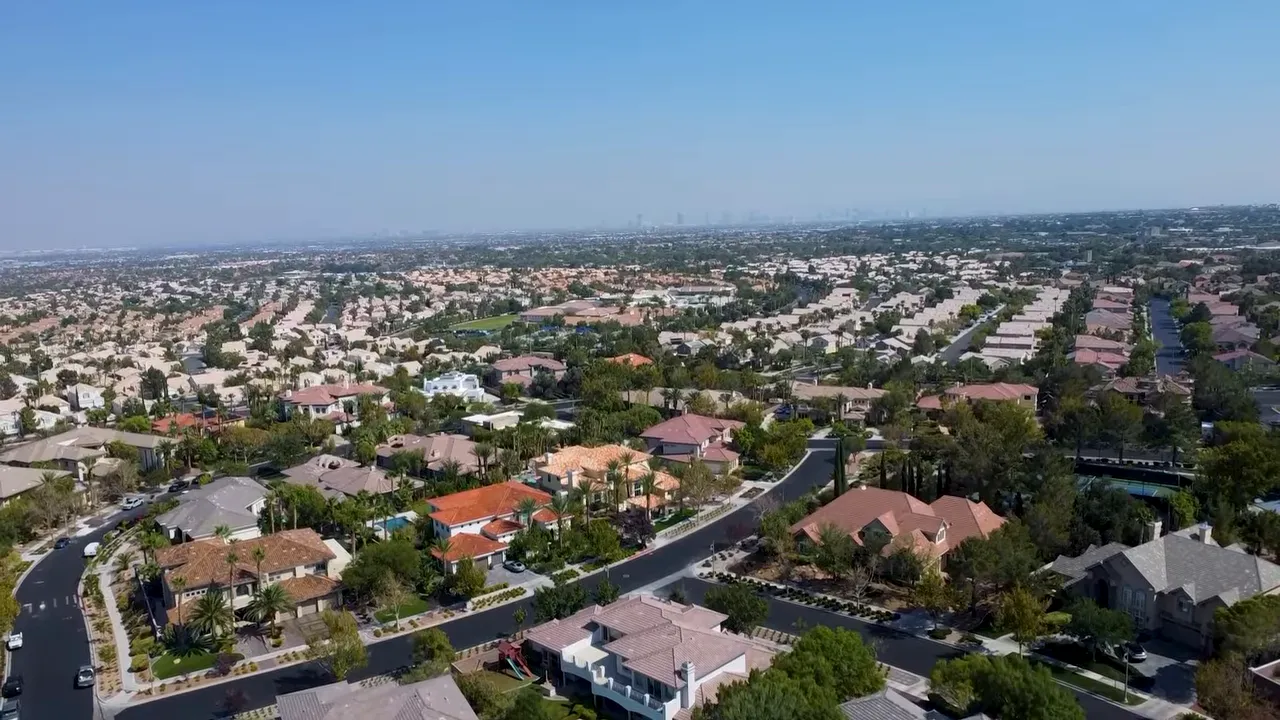
Community activities do not automatically cure loneliness. We still have to show up. But being surrounded by people in a similar phase of life gives us more opportunities to connect than sitting alone in a subdivision where nobody knows our name.
2. Losing the Keys Does Not Have to Mean Losing Freedom
Driving is tied to independence more deeply than most of us realize. When eyesight changes, night driving becomes stressful, or freeway traffic feels like more than we want to handle, daily life can become harder quickly. In a car-dependent city, a grocery store may be 10 or 20 minutes away, doctors may be across town, and friends may live in every direction.
That is why retiring in Las Vegas requires an honest look at mobility. Las Vegas is a car-oriented city. We should not pretend otherwise. Still, several options can help preserve independence longer:
- Ride-share services such as Uber and Lyft are widely available.
- Autonomous transportation is already beginning to operate in parts of the valley, including Zoox robotaxis.
- Waymo has announced plans connected to Las Vegas, and Tesla is preparing infrastructure for robotaxi operations.
- Golf carts are commonly used in many 55-plus communities for short trips to clubhouses, golf courses, and sometimes nearby shopping.
- Local organizations and volunteers help some older residents reach medical appointments, grocery stores, and essential destinations.
Driver-assistance technology may also change the conversation. Tesla supervised self-driving can steer, accelerate, brake, and make lane changes, although the driver remains responsible and must stay attentive. A few years ago, that sounded like science fiction. Today, it can mean less anxiety for someone who finds night driving or freeway traffic increasingly difficult.
Transportation is only half the issue, though. We also need a reason to leave the house. Freedom means more when there are people to see, places to go, and something that makes us feel useful.
3. Healthcare Will Become One of Our Biggest Logistical Problems
After 65, medical appointments can become a much larger part of life. What used to be an annual checkup may become monthly or even more frequent, depending on what is happening with our health. Being close to care we trust goes from a nice convenience to a major part of daily planning.
Healthcare in Las Vegas is not perfect. We have never lived anywhere where it was. The important question is whether a medical system is workable, whether we can find professionals we have confidence in, and whether getting from one side of the valley to the other is manageable when care is needed.
Sometimes finding the right doctor takes persistence. We may have to keep looking, ask better questions, or replace a provider who is not a good fit. That is frustrating, but it is part of taking responsibility for our care. We should not wait until a crisis to research specialists, hospitals, nearby urgent care, and the practical route to each.
The best healthcare is also what happens between appointments. Retiring in Las Vegas can support healthy routines when we choose a neighborhood near the things we will actually use:
- Gyms and trainers we can reach consistently
- Walking paths and walkable areas
- Grocery stores with food that supports our health
- Hiking trails throughout the valley
- Mount Charleston, where summer temperatures can be about 20 degrees cooler
- Comfortable winter days that make walking outdoors more appealing
Our bodies will change. Most of us will deal with medical issues of one kind or another. The goal is not perfection. The goal is to build an environment that makes it easier to stay active, connected, and engaged with life.

4. We May Outlive Our Money
Few retirement fears are more private than sitting down with a bank statement and trying to calculate forward. How many years do we have left? Will the money last as long as we do?
That concern can keep people awake at three in the morning, yet many never discuss it honestly with their children, partner, financial planner, or real estate agent. We should. Retiring in Las Vegas can change the math for some households because Nevada has no state income tax, no state tax on Social Security income, no estate tax, and no business or franchise tax at the state level.
For someone coming from California, Oregon, or New York, those differences can be significant. But taxes alone are not the answer. The other half of the equation is refusing to buy more house than we actually need.
Being house poor in retirement is a real trap. We may qualify for a much more expensive home, but that does not mean it is the right purchase. A smaller home can leave more money available for travel, investments, hobbies, healthcare, family visits, and the freedom to handle whatever comes next.
For the right person, a home equity conversion mortgage, sometimes called an HECM or reverse mortgage, may be worth discussing with qualified professionals. It is a personal decision, not a universal solution. The core issue is not simply how much house we can buy. It is whether our decisions protect dignity, independence, and choices later in life.
5. The World May Start Treating Us Differently
Turning 65 can change the way people see us before they know anything about who we are. Suddenly, there can be screening questions, louder voices, slower explanations, and assumptions that we are fragile or no longer capable.
Some people truly need additional care. There is nothing wrong with that. The problem comes when people stop seeing the individual and only see the age. We can feel talked over, talked down to, or quietly dismissed.
Retiring in Las Vegas will not magically make younger people treat us differently. But it can place us in a city with a large, active older population. Many people here are still working, running businesses, volunteering, exercising, traveling, making friends, and starting over in ways that are anything but invisible.
In a good 55-plus community, recognition is built into the everyday rhythm of life. Someone sees us at the clubhouse. Someone notices when we have not been around. Someone calls us by name. After feeling overlooked elsewhere, that simple recognition can mean more than most people understand.
6. Retirement Can Feel Like Losing Part of Our Identity
The first months of retirement can feel wonderful. There may be a trip, a pension, more time, and no Monday morning obligation. Then the honeymoon can wear off. One ordinary morning, a question appears: Who are we now?
Some people make the transition easily. They have plans, hobbies, savings, friends, and genuine excitement about leaving work behind. Others hit retirement like a wall because work was not just a job. It was their routine, their social circle, the place where people depended on them, and a big part of their identity.
Loss can arrive in stages. It may be retirement itself. It may be no longer being able to golf, travel the same way, or do something our body once handled easily. Those are real losses, even if nobody has died.
The danger is not that one chapter ends. The real danger is deciding that nothing meaningful can replace it. We cannot give up on ourselves.
That is where community becomes important again. Retiring in Las Vegas can offer access to clubs, classes, volunteer groups, part-time work, pickleball leagues, fitness programs, ceramic studios, entertainment, and more. But none of it works automatically. We have to decide that showing up is part of the plan.
Volunteering may be one of the strongest tools we have for rebuilding purpose. Helping someone else gets us out of our own head and reminds us that our experience, knowledge, and time still matter.
7. We May Lose Our Partner
This is difficult to talk about, which is exactly why we need to talk about it. One partner usually goes first. A serious illness or medical event can also shift a relationship overnight. One of us may become a caregiver. Plans can change. We may begin grieving the life we had even while the person we love is still beside us.
These conversations are easier when we have them calmly, before grief forces us into immediate decisions. We should discuss what each person would want, where we would live, who could help, and what support would be needed if health or loss changes everything.
Grief does not move in a straight line. People may be frightened, overwhelmed, angry, numb, or all of those things at once. Sometimes the most helpful thing another person can do is remain steady, stay present, and not turn away from the fear.
Where we live can affect what happens after a loss. If we are already part of an active community, neighbors may notice, friends may call, and familiar routines may give us a reason to leave the house. The habits that keep us moving and connected can become a lifeline.
8. Family May Be Far Away When We Need Them
For many people, this is the question that stops a move before it begins. The children may be in Denver. The grandchildren may be in Boston. The idea of being thousands of miles away from family can feel unbearable.
That concern is real. But we should also be honest about how family life works. Even when children live nearby, they may be working, managing school schedules, attending activities, helping with homework, and raising their own families. Physical proximity does not always mean daily availability.
Retiring in Las Vegas can make visits easier than many people expect because it is a major travel destination with frequent flights and direct connections from cities around the country. Family often has a reason to visit: a show, concert, sporting event, birthday, convention, or long weekend away.
Some retirees intentionally choose a larger home because they expect family to visit. Others prefer a simpler home and use the savings for travel. There is no single right answer.
Community does not replace family. Nothing does. But nearby neighbors and friends can help with the little things, check in when something seems off, and provide day-to-day support without requiring somebody to get on an airplane.
Why Where You Retire Can Change Everything
We may have less time than we think. That is not meant to be alarming. It is the point.
When we stop running from the fact that time is limited, it can become fuel. It can become the reason we make the phone call, take the trip, begin a healthier routine, repair a relationship, or finally make the move we have been discussing for years.
Our bodies change. Our roles change. The things that once defined us can disappear. Yet beneath all that change, there can still be awareness, love, connection, and quiet joy. Not the loud kind of joy that pretends nothing hurts. The quieter kind that remains possible even during the hardest seasons of life.
Retiring in Las Vegas is not about finding a perfect zip code. It is about choosing a setting that gives us a better chance to stay active, visible, connected, and supported as life changes. The difficult truths of aging do not disappear because we move. But the right community can make them less isolating and more manageable.
FAQs: Retiring in Las Vegas
Is retiring in Las Vegas only a good fit for people who want to live in a 55-plus community?
No. Large advertised 55-plus communities are a strong fit for many people, especially those who want built-in clubs, activities, and neighbors in a similar stage of life. But most retirees over 55 in Las Vegas do not live in those major communities. The right choice depends on lifestyle, budget, location, health needs, and how much community activity we want around us.
Is Las Vegas too car-dependent for retirement?
Las Vegas is car-oriented, and we should take that seriously when choosing where to live. At the same time, ride-share services, golf carts in some communities, volunteer support, and emerging autonomous transportation can provide alternatives. Choosing a home near daily needs and familiar routes can also make life more manageable.
What should we prioritize when choosing a retirement neighborhood?
We should think beyond the house. Consider proximity to healthcare, grocery stores, fitness options, trails, social activities, transportation, family access, and the kind of neighbors we want around us. A community that supports our daily routines can matter more than extra square footage.
Does Nevada's tax structure make retiring in Las Vegas more affordable?
Nevada has no state income tax, no state tax on Social Security income, no estate tax, and no business or franchise tax at the state level. Those factors may improve the retirement math for some households, particularly people moving from higher-tax states. We should still evaluate housing costs, healthcare needs, investments, and overall spending with qualified financial guidance.
How can we rebuild purpose after retirement?
Start by staying connected and useful. Clubs, fitness programs, classes, part-time work, hobbies, and volunteering can all help create a new rhythm. The important thing is not to wait for purpose to arrive on its own. We have to participate in building the next chapter.
If you're thinking about retiring in Las Vegas and want help finding a community that fits your lifestyle, we'd love to help. Whether you're looking for an active 55+ neighborhood, a low-maintenance home, or simply want to understand your options, reach out anytime. We'll help you find a place that feels right for the years ahead. Call or Text 702-820-0943