Healthcare in Las Vegas, NV: What Retirees Need to Know
Before you retire to Las Vegas, there's one question you need to answer: Can you get the healthcare you need here?
I love living in this city. I've been here more than 25 years. But Nevada ranks near the bottom nationally for doctors per resident, and when you're choosing where to spend your retirement, that deserves your attention. My wife and I have been patients here for more than 25 years. Between her 30+ surgeries, my open heart surgery, and now my upcoming spine surgery, we've had plenty of experience with the healthcare system.
In this article, I'm going to share what we've learned, what I check on before moving here, and where the major medical centers are in relation to the 55+ communities you might be considering.
Let's talk about what it's actually like to get medical care here in Las Vegas.
Table of Contents
- My Personal Experience with Las Vegas Healthcare
- Can You Get Good Healthcare in Las Vegas?
- Hospital Ratings: What They Tell You and What They Don't
- The Questions I Asked Before Trusting My Surgeon
- How to Research Doctors Before Your First Appointment
- Hospitals Near 55+ Communities: Mapping Your Access
- The Doctor Shortage: What It Means for You
- Specialized Healthcare in Las Vegas
- Conclusion: What Retirees Should Know
My Personal Experience with Las Vegas Healthcare
Most people who do these videos talk about healthcare in Las Vegas from the outside. They look at the numbers, they look at stats, and that's what they talk about. But on October 22nd, I'll be checking in for spine surgery at Summerlin Hospital Medical Center.
I've got a variety of issues. I've got a damaged disc and a piece is broken loose and it's pressing on a nerve, so that feels interesting once in a while. I also have severe stenosis, which is a narrowing of my spinal canal, and also need to have some decompression on my L4. My surgeon plans to remove the disc fragments, fuse L5, and decompress L4 to make more room for the nerves. He said to expect about 4 or 5 days in the hospital and probably 6 weeks without driving. For someone who shows houses for a living, that takes a little planning. I'm very glad I have helpers and an amazing team.
Some mornings are better than others. Sleeping is a challenge. I'm sleeping 3 to 5 hours a night, and some days I kind of feel like I'm 95 and not 67. So if I look a little tired, friends, you now know why. Meanwhile, I've got about 9 deals in escrow, and life keeps moving. Fortunately, I have this incredible team that runs like clockwork, so our clients are taken care of while I take care of my back.
My wife recently had a shoulder replacement here too, and she's about 8 weeks into recovery, and honestly, she's doing great. She had Dr. Robert Michelin, who's Cedars-Sinai trained. I don't think we've had a better surgical experience since we've been here. Her care was excellent.
Between us, we've spent more than 25 years getting medical care here in Las Vegas for a variety of issues. She's had more than 30 surgeries over the years. I've had open heart surgery about 6 years ago. We've both received excellent care here in this valley. That doesn't mean every appointment or every hospital experience has been perfect. It has not been at all. We've had to fire a few doctors along the way. We've had to ask questions, speak up, and make very careful choices. Those are the experiences I want to share with you.
When we first moved here, there were far fewer healthcare options. I've watched that change over the years, and I'm going into this surgery feeling calm and confident in the people taking care of me, especially my surgeon. If a health concern is affecting when or where you move, that belongs in our conversation from the beginning. I can help you explore communities and homes with access to your care in mind.
Can You Get Good Healthcare in Las Vegas?
Some questions in my work come up over and over again, and here's one of them: Micah, I love what I'm seeing in Las Vegas, but can I get good healthcare here?
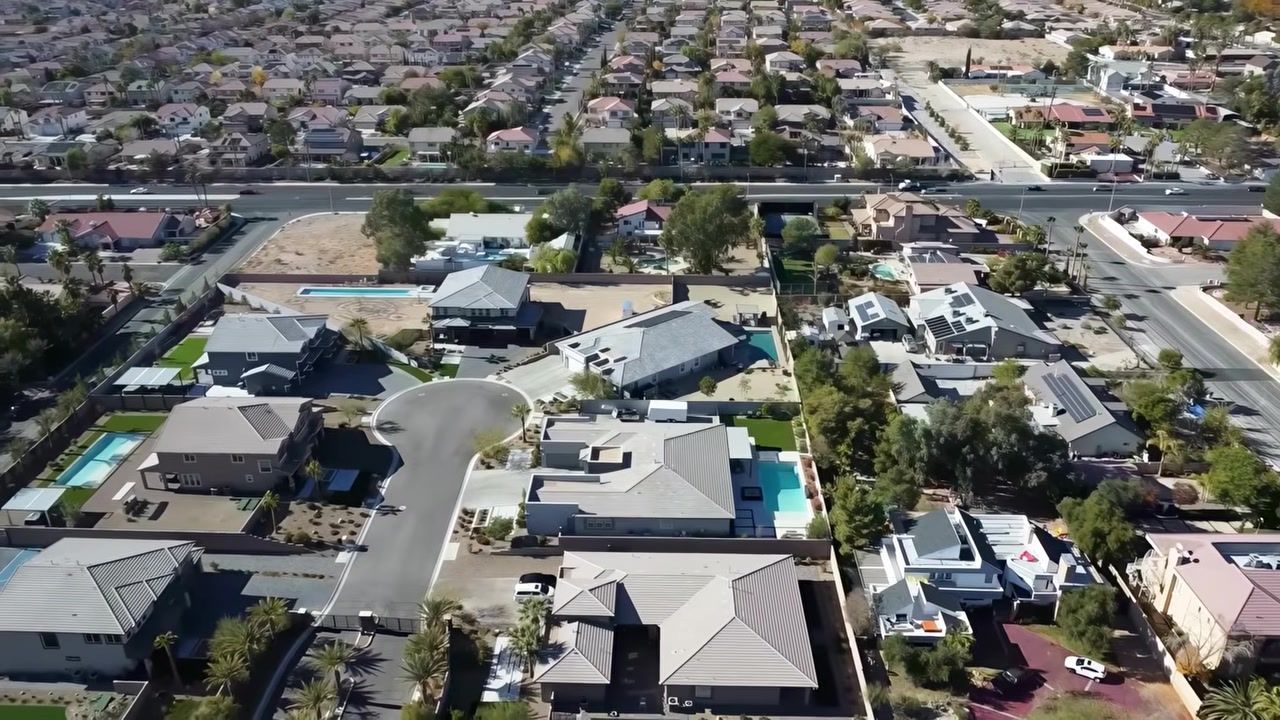
That's one of the biggest questions I hear from people who are considering retiring here, and I understand it. When you're in your 60s or 70s, leaving doctors you know and trust can be harder than leaving your house. Many of my clients are managing a variety of health issues, not just me, so these conversations get very personal.
I've had several clients receive a diagnosis in the middle of their home search, put everything on hold, and then come back out a few months later once they'd recovered. That's happened on more than one occasion. Right now I'm selling a home for clients whose health has made it impossible for them to continue living in that particular house.
When you ask me about finding a doctor, waiting for a specialist, or being close to a hospital, I take that seriously. Those things affect your everyday life no matter how good the area or the home is. These things are incredibly important.
People ask me about hospital ratings all the time, but a hospital rating can only answer part of the question. It's very easy to see some low-star hospital ratings and wonder whether the whole city's healthcare is a problem, or see 5 stars and assume you're covered. It takes in-depth research these days when it comes to medical.
For my own surgery, I started with the doctor, the surgeon. I got references from multiple doctors. I really want to know who would actually be operating on me, how much experience they have with my procedure, and do I feel comfortable trusting them with my back, my spine, my spinal cord? It's sensitive. A lot of things can go wrong and they don't guarantee it.
Then I look at the hospital. As it turns out, the hospital where I'm having my surgery at, it's not one of the highest rated ones in the valley. So let me show you those ratings and explain why I'm comfortable with my choice despite the mediocre ratings that my hospital's getting.
Hospital Ratings: What They Tell You and What They Don't
Let me be clear about something. I did not choose Summerlin Hospital. I chose my surgeon, and Summerlin is where he operates. That's where his team is, and that's where I'll be having my surgery.
Was it my first choice of hospitals? No. If I could wave a magic wand, my surgeon and his whole team would be operating out of Mountain View. They have very high ratings. I like Mountain View Hospital. But the person operating on my spine is what really matters to me, and that is more important than any individual hospital ratings.
Medicare has a tool called Care Compare, and that gives hospitals an overall rating of 1 to 5 stars. It considers things like patient outcomes, safety, readmissions, and patient experience as part of the checklist that they use to analyze ratings.
The ratings I looked at put Summerlin Hospital at 3 stars. I was hoping for at least 4.5. Mountain View and Southern Hills had 4 stars. Valley Hospital , where my wife had her back surgery, had 2 stars. St. Rose Dominican campuses are rated separately. Sienna had 3 stars and San Martin had 4. San Martin is where I had my open heart surgery, and my experience there was absolutely amazing. Don't want to go back, but I love that place. When somebody takes care of you through something like that, you don't forget about it. I'm not going to.
My wife and I have both been patients at Summerlin Hospital as well. It's a very nice facility right in the heart of Summerlin, but when you're lying in a hospital bed, you care about a lot more than just a building in a nice location. You want people to listen, treat you respectfully, and respond when you need help.
Yes, I have some concerns about that, and my surgeon knows it. He understands that the hospital experience is not always perfect, and he's given me his cell phone number. If my wife or I have a concern about how things are going, usually funny things might happen on the night shift or whatever, we can reach out to him directly on his cell phone and he'll fix it.
That means a lot to me. I'm not anticipating any problems, but it's really nice to know I've got that cell phone I can call if there is one. I'm going to be the one in that bed. My wife will be the one there worrying about me. Knowing that we have someone to call, someone who knows me and is responsible for my surgical care, gives us both quite a bit of peace of mind.
That doesn't guarantee every part of the stay will go smoothly. I can't imagine it'll be 100% perfect, but it helps me feel comfortable going forward. So I'm taking the hospital rating seriously while remembering it just does not tell me how skilled my surgeon is at this particular operation. His experience, his team, and the way he's responded to my concerns are all part of my decision.
The Questions I Asked Before Trusting My Surgeon
The conversation that helped me the most happened sitting right across from my surgeon in his office. I wanted to know how many of these procedures he'd done, what his results were like, and whether he'd give me straight answers when I asked him something uncomfortable. So of course I had something uncomfortable to ask him.
He told me that he'd done more than 3,000 of these surgeries, and that's just what he does. He's older too, so I asked him just straight up. I said, Doc, how steady are your hands? He said, well, the last patient I had barely made it off the operating table. I looked at him, and he looked at me, and we both started laughing. I guess that's surgical humor, friends. Hardy har har. We both had a laugh, but I was asking a serious question.
I'm 67. I know getting older comes with changes, and I wanted to feel comfortable talking about that with the person who's going to be operating on my spine. That's something I want you to take away from this. You're allowed to ask uncomfortable questions. It's your body.
How often do you do this exact operation? I asked. What complications do you see and how often? I asked him, have you lost a patient? What improvement can I realistically expect? And what do you recommend? And why do you recommend doing it at that hospital, at Summerlin Hospital?
Those are the kinds of questions in the Federal Patient Guide that I've linked. You can use that Federal Patient Guide if you go into your doctor. Bring them with you if you're worried that you're gonna forget once you're in the office. I know that I always do, so I always write them down.
I also got a second opinion from a younger surgeon with advanced training in robotic and microsurgery. I wanted to understand whether a different approach would make a meaningful difference for me. After that appointment, I decided the robotic approach was probably not right for my situation. Just a gut feel. Even if it might shorten my recovery a little, I wasn't convinced it would change my outcome enough to choose it. Anyway, that was my decision about my back. Each of us can only make our best choices, and a lot of it just comes down to gut feel, 'cause I'm not an expert in deciding how qualified doctors are. But getting that second opinion helped me feel more comfortable with the decision I made.

My wife's shoulder surgery is another example of finding someone we felt really good about. Her surgeon was trained at Cedars-Sinai and did a fantastic job. She had the replacement in a surgical center. If that's what your doctor recommends, be sure to confirm that your procedure is covered at that facility and ask about both the facility charges and the doctor fees. They can vary. In our case, everything was covered, but you wanna understand that before surgery day. It's terrible we've had so much experience with this.
Remember what I said about being able to reach my surgeon? There's a reason that matters so much to me. A couple of years ago, my wife had back surgery at Valley View Hospital. Things started off well, but a couple of staff members on her floor in the evening shift made some comments that were very problematic. They did not sit well with us. We called her surgeon and he came in and addressed what had happened and had those staff members taken off the floor. It wasn't good. Her experience was good overall and she had a good result, but I remember how much it mattered that he responded when we needed him.
Not every doctor gives out a personal cell phone number. What I'd ask is, if there's a problem after surgery, how do my wife or I reach out to you and your team? And what happens if it's after hours? I want to know this before I need the answer.
How to Research Doctors Before Your First Appointment
I strongly recommend using AI. It's one of the best research tools I have found for learning about people and their professional background. People use it to research me all the time. They call me up and say, Micah, I found you on AI. It recommended you. I'm like, thank you, AI.
You can use it to help research your doctors too. Give it the doctor's full name, specialty, and city. Ask it to help you look into their training experience, board certification, and any public disciplinary history. It's out there. Ask for links to the original sources so you can check out what it finds. Just make sure it's researching the right person and verify the information. AI can make mistakes or miss things, as we all know. I'd use it to organize my research and prepare better questions and then confirm the details with the official sources.
For an MD, start with the Nevada State Board of Medical Examiners. Check the license status and any public disciplinary history. Researching on AI can give you a great starting point for questions.
None of this can guarantee a perfect result when we're having surgeries. Nobody guarantees a surgery. But I do want to go into it knowing that I've asked my questions, considered my options, and that I've chosen someone I trust.
Hospitals Near 55+ Communities: Mapping Your Access
Once you have found the doctors you need, the next question gets practical. Where is it that you'd like to live and what will it take to get to those appointments?
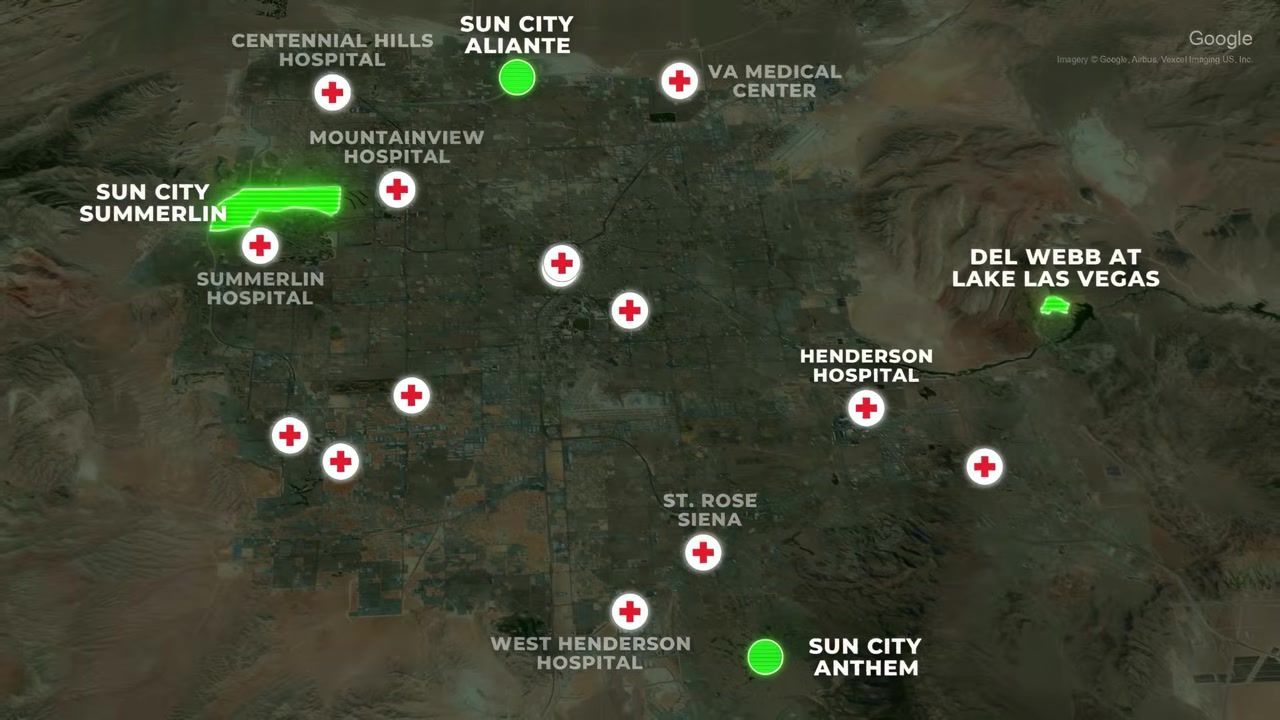
When you're choosing where to live in Las Vegas, put your doctor's offices on a map right alongside the homes you're considering. Van Drive could become a part of your life here. We have a medical district near downtown, but healthcare in Las Vegas is spread all across the valley. You don't have to go to one central location. It is spread pretty evenly throughout the entire valley. You don't have to live downtown to be near a hospital.
Central Valley Hospitals
In the Central Valley, you've got University Medical Center with its Level 1 trauma center and Valley Hospital on Shadow Lane. A little further east is Sunrise Hospital on Maryland Parkway. That's where they have the neonatal ICU. Very good hospital.
North and West Side Hospitals
On the north and west sides, there's Mountain View in the northwest, Centennial Hills further north, and Summerlin Hospital out west.
Southwest and Henderson Hospitals
In the southwest, you've got Spring Valley Hospital , Southern Hills , and St. Rose San Martin where I had my heart surgery. Henderson's got 2 Henderson Hospital locations, one near Lake Las Vegas and one by the M Resort. It's got St. Rose Sienna and St. Rose de Lima campuses. So even within Henderson, the hospital you need could be in a different part of town from where you're considering.
If you're a veteran, be sure to include the VA Medical Center in North Las Vegas in your research depending on your eligibility and enrollment. Actually, the VA Hospital is one of our highly rated hospitals in town. I'm proud to say.
Matching Communities to Hospitals
Let's overlay some 55+ communities onto that same map.
If you're looking in Sun City Summerlin and you're on the west side, you've got Summerlin Hospital and Mountain View, and you're kind of sandwiched in between those 2. Sun City Aliante puts you in the northern part of the valley where you have Centennial Hills Hospital and the VA Medical Center not far away. That's especially relevant for some veteran buyers, and I get a lot of those.
In Sun City Anthem , you'll want to look at access to St. Rose Sienna campus and the West Henderson Hospital. If you're considering Del Webb at Lake Las Vegas , map the actual drive to your doctors and the Henderson hospitals, which is really not far from the 95 and Galleria Drive. Sun City Anthem and Lake Las Vegas are both Henderson, but they are very different starting points for a medical appointment.
That's why I would not settle for a listing that says close to healthcare. Close to which facility? That's what you need to know. Does your doctor work there? Does it accept your health insurance? And what does the drive look like when you actually need to make it?
My Rule for Primary Care vs. Specialists
Here's the rule I follow for myself. I keep my primary care close to home, and I'm willing to travel anywhere in the valley for a specialist, at least one that I trust.
The reason for that is my primary care doctor is the person I'll see for checkups, refills, and those times when something just doesn't feel right, those kind of appointments. I want that office to be convenient with easy parking and a trip I can manage, even on a day when my back or one of my other issues is giving me trouble.
It's also worth knowing which nearby urgent care centers accept your insurance and what their hours are. It's good to know these things. These little urgent care incidents only happen after hours, it seems.
With specialists, I'm willing to cast a wider net because it's only 30-40 minutes across the whole city. It's really not that big of a drive. I've had to change doctors over the years, and I'd rather make a longer drive to someone I trust than stay with someone just because their office is around the corner.
But how often you need to go matters. A specialist you see 2 or 3 times a year is one thing. Frequent treatments or several weeks of physical therapy are another. That's when the drive deserves a lot more weight in your home search.
I ended up having to drive all the way to Henderson for my second opinion recently. It took 35 minutes. For me, the trip was worth it. And you know me, I'm out there all the time anyway. But if you're coming from the Summerlin side, the 215 Beltway can help you get around the valley without driving straight through the center of town. Still, test the trip yourself. See how it feels to you. Drive it around the time you normally would have an appointment. Think about who you'd take if you couldn't drive too. With 6 weeks off the road coming up, that's gonna be very real to me. I'll be getting around working. I'll just have to have a driver.
The goal is to find a home that you love in a location that works for the care you actually need. Of course, being near a doctor's office does not tell you whether they're accepting patients or how soon you can get in. It's important to call and find those things out.
The Doctor Shortage: What It Means for You
Let's talk honestly about the doctor shortage. It's something that people ask about, and I want to just be straight about the doctor shortage here because it's real, and if you're thinking about retiring here, you deserve an honest answer.
Nevada ranks near the bottom nationally for physicians per resident, but remember, that's a statewide measure and it doesn't tell you whether the specialist you need in Las Vegas can see you next week or 3 months from now. We're getting ready to talk about the nature of the physician shortage, not just in Las Vegas but all over the country. This information is very useful for understanding the problem, but it's not going to help you get a doctor's appointment onto your calendar. For that, you still need to call the offices that you're considering and ask about availability.
Why the Shortage Exists
Meanwhile, the need for care just keeps growing. UNLV's population forecast projects that Clark County's population age 65 and older will continue increasing for decades. It's good news for us older people. That means more people looking for many of the same services you and I need.
So why can't we just bring in more doctors? Well, some of that is happening. We're getting doctors to relocate here. But when it comes to new doctors, part of the answer is the training.
After medical school, doctors need to complete a residency, and Medicare helps fund many of those very expensive positions. But there are strict limits on how many residency positions Medicare will support at each hospital. The 2021 funding law added 1,000 positions nationwide, but divide that up over 50 states and it's only phased in over several years. Before that, it hasn't changed since 1996. These positions were being shared across the country, so they weren't gonna solve Nevada's shortage on their own. They're also building on what used to be a much smaller training system.
Back in 2004, Nevada had just 10 accredited residency programs. Growing that takes time and keeping doctors here after they finish is another part of the challenge.
What It Looks Like in Practice
Here's what that looks like in my own life. I see my rheumatologist every 6 months. In fact, I see my physician every year and her PA once a year. So every 6 months I get rheumatology treatment. If I want an earlier appointment, that means waiting or trying to pick up a cancellation appointment, which are available from time to time, but you need to plan ahead.
My experience with cardiology and orthopedics has been completely different. I've generally been able to get in more quickly, and seeing my primary care doctor has been easier than seeing my rheumatologist. So it really just depends on what the specialty is.
I'm an established patient, but someone calling in for a first appointment may have a different experience, even at the same office. That's why I can't promise you that finding a doctor here will be easy, and I wouldn't assume that every specialty has the same problem. It really pays to make a few phone calls, reach out, and talk with their scheduling office and find out what the situation is.
Your access depends on the kind of care you need, your insurance, and whether the doctor is accepting new patients. So before you move, make those calls. Do you accept my specific insurance plan? Are you taking new patients? Do I need a referral? How far out is the first appointment available?
Find a primary care doctor early and ask how they help patients get connected with specialists. Some are better than others at doing that. If you already have an ongoing condition, work with your current doctor on the handoff so that you know how your care will continue.
Reasons for Hope
There are reasons I feel hopeful. Nevada went from 10 accredited residency programs in 2004 to 39 in 2025. That's nearly 4 times as many. In Southern Nevada, the number of doctors completing residency each year roughly tripled between 2016 and 2025.
Training doctors here gives us an opportunity to keep them here. An earlier state workforce report found that more than half of physicians who complete their residency or fellowship training in Nevada were practicing in the same state. They already have their connections and networking and all that stuff. They tend to practice where they have their residency, but retention still needs work.
The 2025 graduate report found that about 41% plan to stay in Nevada for practice or for further training. So expanding training is progress, and we also need to give those doctors reasons and opportunities to stay.
I take the doctor shortage seriously because I have to deal with all the scheduling myself. I also get good care here, and so does my wife. Both of those things are true. You can find excellent doctors here in Las Vegas, but you may need a little patience and planning to get established with them. That's the homework I do before moving.
Specialized Healthcare in Las Vegas
When my wife and I first moved to Las Vegas, we had far fewer choices. Fewer healthcare options and fewer needs, to be honest with you. The range of care available here has changed considerably over the years.
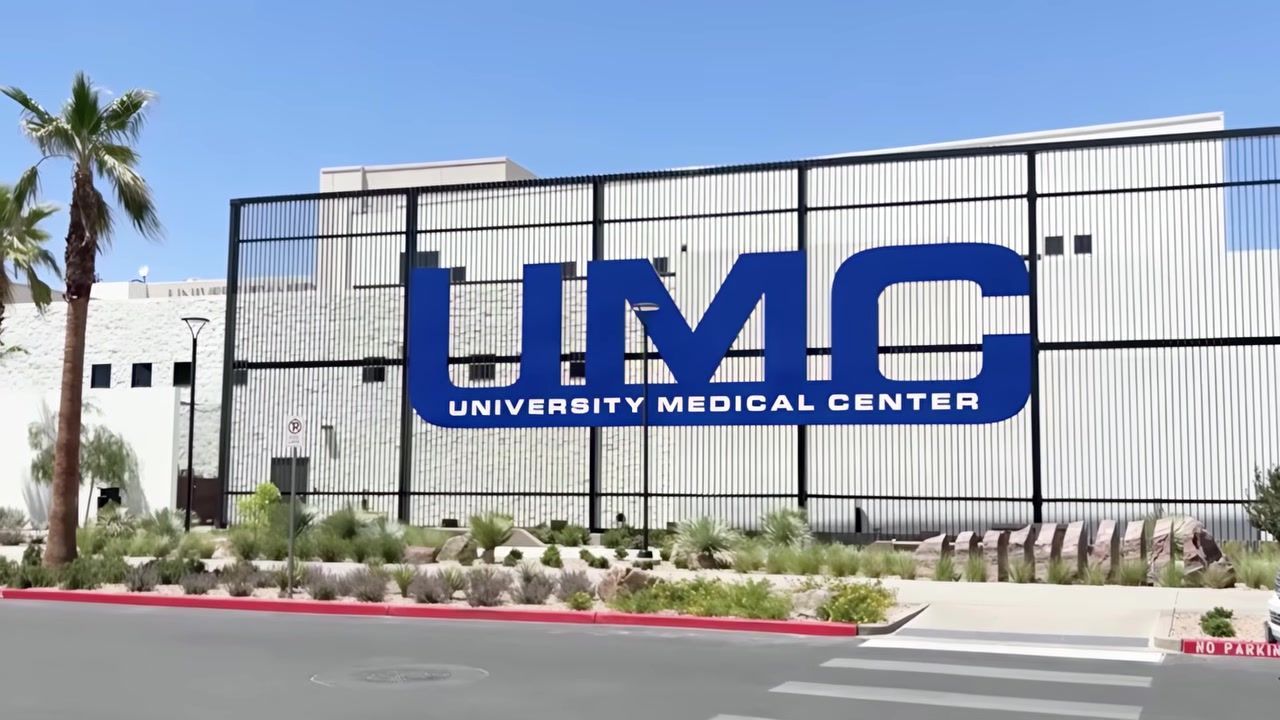
Take UMC , for example, University Medical Center. People know it for trauma care, but it also has a burn center, heart and stroke care, and even a kidney transplant program. That's pretty amazing. That's a substantial range of specialized care right here in the valley. UMC also offers robotic-assisted procedures, including knee replacements and lung biopsies. As I mentioned with my own surgery, the right approach really depends on your situation, but having those options available locally matters.
Then there's the Cleveland Clinic Lou Ruvo Brain Center for Health downtown. You've probably seen that Frank Gehry building with all the curved metal exterior. It looks like it kind of melted. It's a really interesting building. It's hard to miss. Inside, they care for people with conditions including Alzheimer's, Parkinson's, and multiple sclerosis. They also offer access to clinical trials. For families facing those diagnoses, knowing there's a specialized center here is a meaningful part of evaluating the move.
For cancer care, Comprehensive Cancer Centers has locations all across the valley. In May 2026, they announced a collaboration with the Sarah Cannon Research Institute to expand clinical trial opportunities for eligible patients. That could mean more treatment research options closer to home, depending on the diagnosis and the trial, of course.
Valley Health Specialty Hospital offers orthopedic services and inpatient rehabilitation. When you're facing a joint replacement or back surgery, you'll want to understand what support you might need afterwards and where you can get it. I've got my PT already lined up. That is certainly on my mind right now.
There are also plans for further development in the medical district. The city announced a proposed medical office project near Wellness Way and Shadow Lane. I treat that as something to watch. A proposed building doesn't give you an appointment today, but it's another sign of investment in the area.
Having these facilities here does not automatically mean that every service is right for you or covered by your insurance. You still need to check with your doctors and your plan, but I want you to have a fuller picture of what's available. If you're considering retiring here, look into the care you need by name, whether it's a particular specialty treatment or rehabilitation service.
My wife and I have received excellent care in Las Vegas through some serious health problems, and those experiences are a big part of why I feel comfortable heading into surgery in a couple of weeks.
Conclusion: What Retirees Should Know
I'm sharing this as a patient and someone who helps people retire here. I'm not a doctor, of course, so you got to work through your own medical decisions with the people treating you and the people you love.
Remember that 3-star hospital? Well, I still care about the rating, but I also know who is operating on me, why he works there, and how my wife and I can reach him if we have any concerns. That gives the rating some context. I don't worry about it.
If you're considering Las Vegas, give yourself time to do that same homework. Research your doctors and the facilities they use. Confirm your coverage and appointment availability. Then think about how those locations fit into your everyday life. Remember, anywhere in town is only about 35 minutes away, and for most people, it's not a big deal.
Healthcare deserves a real place in your retirement plans. Once you understand what kind of care you can get here and how you can access it, you'll be in a much better position to decide whether Las Vegas is right for you.
I love living in Las Vegas, friends. I've trusted the doctors here with my heart, my life, my wife's shoulder, my wife's back, and now my spine. After everything we've been through, this is still where we want to live.
If you're thinking about retiring here, let's talk about what everyday life needs to look like for you, including access to the medical care you depend on. Call me at 702-820-0943 and we'll start narrowing down the communities and homes that fit your life and medical needs.
FAQ
What are the hospital ratings in Las Vegas?
Medicare's Care Compare tool rates Las Vegas hospitals from 1 to 5 stars. Mountain View and Southern Hills have 4 stars. Summerlin Hospital has 3 stars. Valley Hospital has 2 stars. St. Rose Dominican campuses are rated separately, with San Martin at 4 stars and Sienna at 3 stars. The rating considers patient outcomes, safety, readmissions, and patient experience, but it doesn't tell you how skilled your specific surgeon is.
How do I research doctors before moving to Las Vegas?
Use AI to research a doctor's full name, specialty, training, board certification, and any public disciplinary history. Ask for links to original sources and verify the information. For an MD, check the Nevada State Board of Medical Examiners for license status and disciplinary history. AI can organize your research and help you prepare better questions, but always confirm details with official sources.
Is there a doctor shortage in Las Vegas?
Yes. Nevada ranks near the bottom nationally for physicians per resident. That's a statewide measure and doesn't tell you whether the specialist you need can see you next week or 3 months from now. Your access depends on the kind of care you need, your insurance, and whether the doctor is accepting new patients. Call offices directly to ask about availability, insurance acceptance, and how far out the first appointment is.
Which hospitals are near 55+ communities in Las Vegas?
Sun City Summerlin is between Summerlin Hospital and Mountain View. Sun City Aliante is near Centennial Hills Hospital and the VA Medical Center. Sun City Anthem has access to St. Rose Sienna and West Henderson Hospital. Del Webb at Lake Las Vegas is near Henderson hospitals off the 95 and Galleria Drive. Map the actual drive to your doctors and confirm which facility they use.
What specialized healthcare is available in Las Vegas?
University Medical Center has a Level 1 trauma center, burn center, heart and stroke care, and a kidney transplant program. The Cleveland Clinic Lou Ruvo Brain Center downtown treats Alzheimer's, Parkinson's, and multiple sclerosis and offers clinical trials. Comprehensive Cancer Centers has locations across the valley and collaborates with the Sarah Cannon Research Institute for clinical trial opportunities. Valley Health Specialty Hospital offers orthopedic services and inpatient rehabilitation.
What questions should I ask a surgeon before surgery?
Ask how many of these exact procedures they've done, what their results are like, what complications they see and how often, whether they've lost a patient, what improvement you can realistically expect, and why they recommend that hospital. Ask how you or your spouse can reach them if there's a problem after surgery, especially after hours. You're allowed to ask uncomfortable questions. It's your body.
Micah Bleecher Group
Helping 55+ buyers, retirees, and relocation clients make confident Las Vegas real estate decisions with local expertise, patience, and genuine care.

Recent Posts