The Real Pros and Cons of 55+ Communities in Las Vegas
Walking through a 55+ clubhouse during happy hour feels different than touring an empty model home. People wave you in. Someone's organizing a wine tasting for Thursday. A book club meets in the corner. You can see why a widow I worked with told me she felt more connected in three months at Sun City Summerlin than she had in decades.
But that same sense of community comes with trade-offs. Age restrictions mean your daughter can't move back in with her ten-year-old if life takes a hard turn. HOA fees climb every year. Your buyer pool shrinks when you sell. I've helped people move both into and out of these neighborhoods, and I've learned that the decision depends entirely on what you value and what you're willing to give up.
Las Vegas has some of the most active 55+ communities in the country. Sun City Summerlin alone has over 7,000 homes, four recreation centers, and three golf courses. Solera in Anthem keeps HOA fees around $95 a month. Trilogy in Summerlin charges $615. The range is huge, and so are the lifestyle differences. Some communities feel like resorts. Others feel like small towns with strict mayors.
I'm going to walk you through what I see on tours, what my clients tell me after they move in, and what the CC&Rs actually say about pets, RVs, and how long your grandkids can visit. This is not a sales pitch. It's an honest look at retiring in Las Vegas in an age-restricted community, with all the benefits and all the fine print.
Table of Contents
- Low Maintenance Living: What It Actually Covers
- Age Restrictions: The 55+ Rule and What It Means for Family
- Social Life That Reduces Isolation
- HOA Rules: Paint Colors, RVs, and Holiday Decorations
- Resort-Style Amenities Without Country Club Fees
- The Financial Reality: HOA Fees and Special Assessments
- Security and Safety Features
- Rental Restrictions: No Airbnb, Limited Terms
- Wellness-Centered Design for Aging in Place
- Resale Considerations: A Smaller Buyer Pool
- The Predictable, Peaceful Environment
- Visitor Limitations and Grandchildren
- Living Among Peers: Shared Life Stages
- Conclusion
Low Maintenance Living: What It Actually Covers
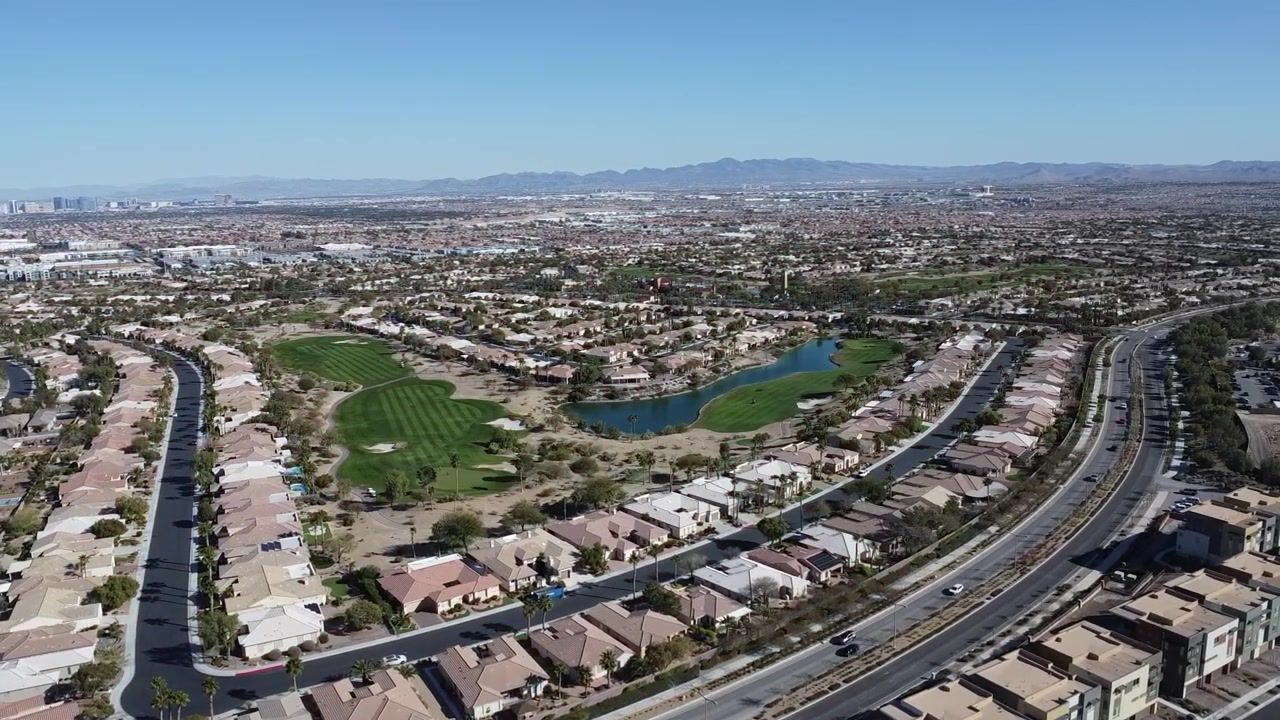
One of the biggest draws of 55+ communities is the promise of low maintenance living. But what that actually means depends on the type of home you buy.
If you choose a patio home, the HOA typically handles all exterior maintenance. That includes landscaping, painting, roof repairs, and sometimes even the water bill for irrigation. You don't touch a rake or a paintbrush. One of my clients in a Summerlin patio home told me he hasn't done any outside maintenance in years and doesn't mind paying the extra couple hundred a month to the HOA to keep it that way.
But most single-family homes in 55+ communities still require you to handle your own exterior upkeep. The difference is that the lots are small and the landscaping is desert. Many retirees either do it themselves or hire an inexpensive crew for a quick blow-and-go and a little trimming. It's not a big job.
Patio homes with full exterior maintenance can push your HOA fees to $400 to $600 a month depending on the community. Single-family homes keep fees lower but add a small maintenance task back into your life. The trade-off is always between convenience and cost.
What makes these homes low maintenance even when you're responsible for the yard is the design. Small footprints. Few steps. Generous doorways. Desert landscaping that doesn't need constant watering. When you travel, you just shut everything down, close the blinds, turn the thermostat down, and go. I like to have my Ring doorbell and Nest controller so I can check in from my phone, but even without that, these homes are easy to lock up and leave.
At the end of the day, low maintenance living means less time spent on chores and more time spent at the clubhouse, on the pickleball court, or just reading a book in the library.
Age Restrictions: The 55+ Rule and What It Means for Family
Every 55+ community in Las Vegas operates under the Federal Housing for Older Persons Act. At least one resident must be 55 or older. A spouse can be younger. But no one under 19 can live there permanently.
That last rule is where things get tricky. I've had clients face tough decisions when a daughter got divorced and needed to move back in with a ten-year-old child. The community rules didn't allow it. They had to choose between helping their daughter and staying in the neighborhood.
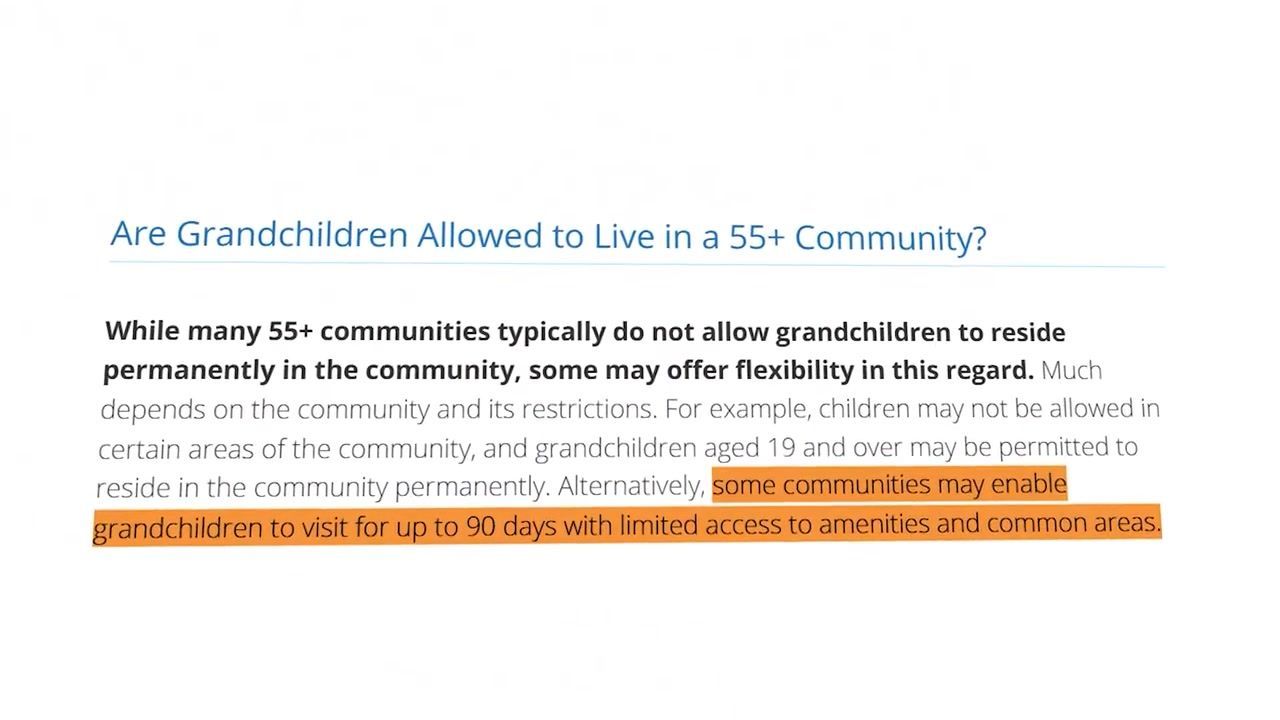
Visitor restrictions add another layer. Most communities limit how long underage visitors can stay. Typically that's 30 to 90 days per year, and sometimes it's only two weeks at a time. If you traditionally host your grandchildren for the entire summer, you may need to track their visits carefully to avoid violating community rules.
Enforcement varies. Some communities are relaxed about visitors. Others are strict and require visitors to check in and get passes to use the amenities. Some communities want documentation if you have a caregiver under 55 living with you due to a medical need.
Before you commit, read the CC&Rs carefully. These are the covenants, conditions, and restrictions that govern the community. You'll get a copy when you're in escrow, and you have a five-day period to review them and make sure they align with your family situation. Sometimes it's possible to get a copy before making an offer, but the official rules are the ones the seller pays for during escrow.
Once you're in, the rules are not flexible. Some communities are more relaxed than others, but some are very strict. Make sure you know what you're signing up for.
Social Life That Reduces Isolation
Loneliness and isolation are bad for your mental and physical health. Studies show that people deteriorate more quickly when they don't have regular social interaction with peers. One of the biggest challenges I see with clients who downsize into regular neighborhoods is that everyone around them is gone during the day or too busy with young families to socialize.
55+ communities solve that problem. The social fabric is woven into everyday life. You don't have to make special plans to see people. You run into neighbors at the fitness center, at happy hour, on the walking trails. Wine tastings, dance nights, card nights, cooking classes. Holiday events throughout the year.
I had a client who moved into Sun City Summerlin after her husband passed away. She was worried about isolation. I checked in with her after three months, and she was in two book clubs, a walking group, and had a standing weekly dinner with neighbors. She told me, "Micah, I have not felt this connected in decades."
When I walk through clubhouses with clients during happy hour, people are so inviting. They say, "Come on in, come on in." It's genuine. For singles, this can be life-changing. One gentleman told me he spent five years in his previous neighborhood barely speaking to anyone. Now he jokes that he has to schedule alone time because he has so many social events.
Nobody is forced to join anything. But having these opportunities at your doorstep makes maintaining an active social life nearly effortless. It's easier to make friends in a 55+ clubhouse than in a regular neighborhood. I've seen it with my own eyes.
HOA Rules: Paint Colors, RVs, and Holiday Decorations
Every 55+ community has a thick book of CC&Rs. We call them the HOA rules. They dictate what you can and cannot do with your property, and many buyers don't fully grasp how these rules will affect their daily life until after they've moved in.
Want to paint your door red? It may not be in the approved color palette. Planning to park your RV in the driveway? Most communities prohibit that. Thinking about growing vegetables in your front yard? Some communities have strict rules about landscaping.
Even simple things like holiday decorations can be regulated. One of my clients was fined for having Christmas lights up past the January 5th deadline. Pet lovers need to be cautious too. Most communities have a two-dog rule, and some have restrictions on size, type, and breed.
Enforcement can feel intrusive. Some communities have what we jokingly call the violation patrol. There's always somebody driving around looking for violations. Fines range from $25 to $50 or more depending on the community and the severity of the violation.
The purpose of these rules is to maintain property values and keep the community looking uniform and well-kept. They're very important to the overall aesthetic. Most of my clients end up having no problems with the rules and appreciate that they keep the quality and value of properties high. They're willing to put up with a little annoyance here and there.
We always get a copy of the rules once we're in escrow. We also get a demand statement, which is the financial statement for the community. It's important to study that statement and make sure the community is properly funded. You've probably read stories about communities in Florida that weren't funded and hit residents with huge assessments. There's even a condo here in town that had a big assessment because HOA fees were too low compared to expenses.
Remember, you're not just buying a home. You're buying a membership in a governed community. Some of these communities, like Sun City Summerlin and Sun City Anthem with over 7,000 homes, are like small towns. They have to have rules. At Sun City Anthem, they even have a thick rule book for all the clubs and committees.
For some, the trade-off is worth it. For others, it can feel suffocating. The alternative is to move into an area with no HOA, and I don't necessarily recommend that either. The land is usually larger and more expensive, and you don't know if your neighbor is going to have a car up on blocks. Most of my clients appreciate the rules and get along fine with their HOA. I get along fine with mine, and most people I know do too.
Resort-Style Amenities Without Country Club Fees
We're not talking about a typical community pool or meeting room. We're talking about resort-style facilities. Indoor heated pools, lap pools, outdoor resort pools. Tennis courts, pickleball courts, bocce ball. Clubhouses with libraries and social directors. These facilities would make a lot of luxury hotels jealous.
Take Sun City Summerlin. They have four recreation centers, three golf courses, swimming pools, tennis courts, pickleball courts, multiple clubhouses, and a small restaurant on property. They have something for everyone. I have clients who moved there and found they're suddenly busier than when they were working.
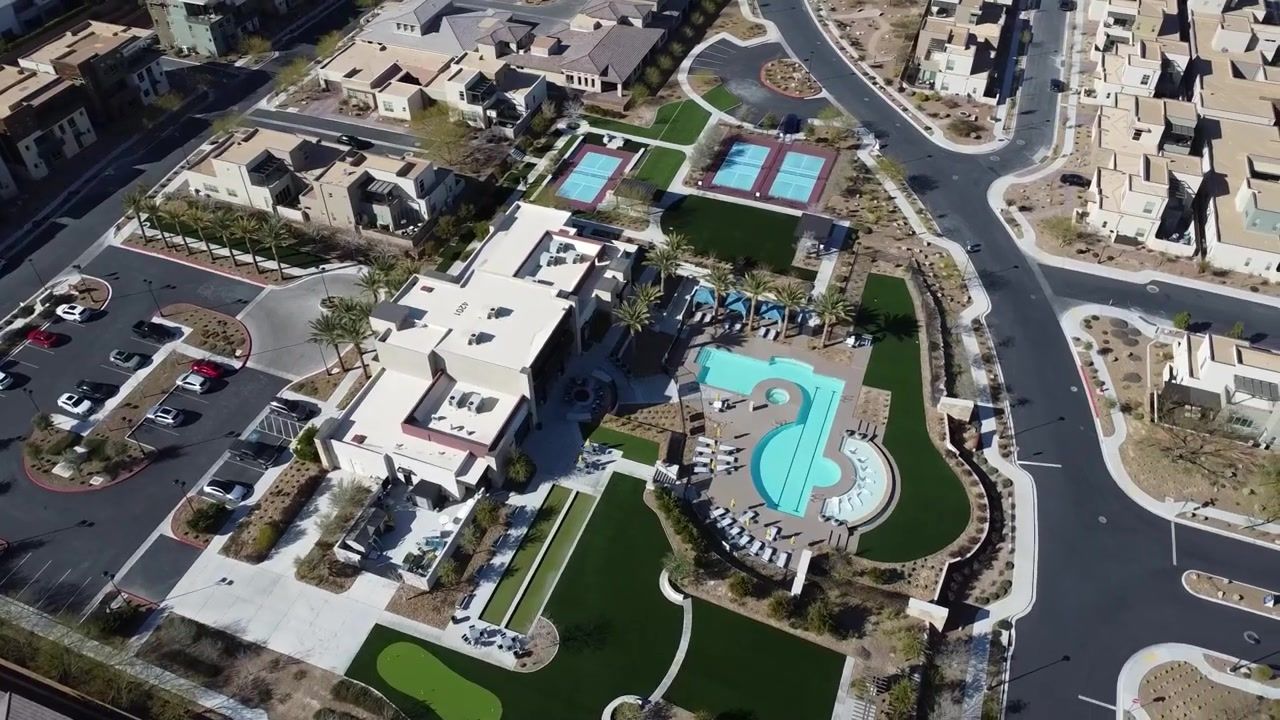
The best part is that it's all steps away from your front door. No driving across town. No paying separate membership fees like you would at a country club. At a country club, you have your HOA dues on one hand and your club membership on the other. You might also need a sport membership to access fitness facilities and social activities. Here, the HOA fee covers all of the fitness and all of the social activities combined.
If you live in a community with a golf course, that's usually extra. But you get discounts on annual passes if you're a golfer. Everything is designed to keep you active and engaged without the hassle.
For many of my clients, it's these amenities that make living in 55+ communities worth the investment. Just last week I was in six or seven different clubhouses around town with two different clients. The energy in a busy, active clubhouse is contagious. You can see members interacting, having fun, doing activities. My clients' eyes light up when they see that.
The Financial Reality: HOA Fees and Special Assessments
Beyond your mortgage, you're going to have an HOA fee. I've seen them as low as $95 a month in communities like Solera in the Anthem area. I've also seen them as high as $615 a month in Trilogy in Summerlin. That's a lot for many retirees.
HOA fees typically increase 2% to 5% annually. What many buyers don't anticipate is the potential for a special assessment. If major repairs are needed and there's not enough in reserves, the community has no choice but to assess residents. We see it all over the news with properties in Florida that haven't been maintaining their reserves. Even here in Las Vegas, I recently heard about an older condo association that hit residents with an $8,000 assessment. People were up in arms, but the money had to come from somewhere.
The state of Nevada audits these associations to ensure financial stability. Many communities require a capital contribution when you move in. At Sun City Anthem, they usually require about one-third of 1% when a new buyer moves in. That money goes into the reserves for future repairs and expenses. It helps keep the monthly costs down. Sun City Anthem's HOA fee is only about $149 a month, which is pretty low.
Brand new communities may have SIDs or LIDs. That stands for Special Improvement District or Limited Improvement District. It's a temporary tax on a brand new neighborhood to pay for infrastructure. It's usually a small amount per year, but it's something to think about.
You're going to be paying these fees whether you're using the amenities or not. Snowbirds who are only here half the year still pay all year long. It's important to factor in these ongoing costs before committing to a 55+ community. But don't worry, there are lots of options from affordable all the way up. Let me know where your budget is and I'll help you stay within it.
Security and Safety Features
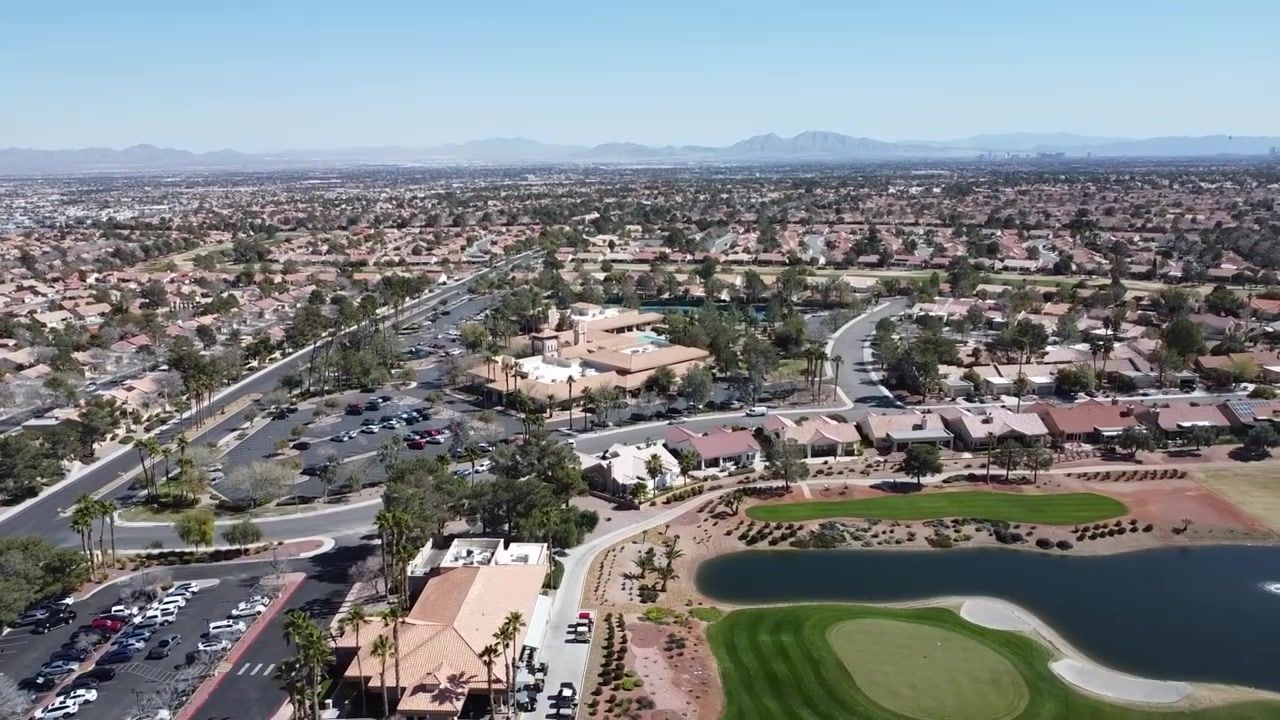
Most 55+ communities in Las Vegas feature gated entrances, and many are guarded. Some communities are not gated at all but have regular security patrols. I see them all the time when I'm out working in those communities.
Sun City Summerlin has retired police officers who patrol in security vehicles. They have a security center at one of their clubhouses, and I see them there all the time. Del Webb communities have electronic gates where you punch in a code, plus security patrols that go around regularly. I always tell my clients to get the security patrol's contact information. If there's ever any funny business, those are the people to call. They can get there quickly, often before the police.
My clients consistently tell me they feel safe walking alone in the evenings in their communities. The community design also means that neighbors tend to look out for each other. It creates an additional layer of informal security that's hard to find in other neighborhoods.
Rental Restrictions: No Airbnb, Limited Terms
If you're thinking of purchasing a property as an investment or you want to rent it out when you're not in town, you need to understand that every community has different rental rules.
Most 55+ communities in Las Vegas have very strict rules. They wouldn't allow an Airbnb or short-term rental. Longer-term rentals often require minimum periods. Sometimes it's six months. It might even be a year in some communities.
At Sun City Summerlin, the minimum rental period can be as low as one month. You can actually buy a property and have monthly rentals. That's very helpful if you're only going to be in town nine months out of the year. You have the option to rent your house out for three months.
Every community is different. Rental policies are easy to find out before you get into escrow. If you're with me looking for homes and you're concerned about rental restrictions, let me know. I'll give the HOA a call and find out. It's not a problem for me to reach out to most of these homeowners associations, especially in the 55+ communities. They're often very nice and quick to answer questions.
Wellness-Centered Design for Aging in Place
Unlike standard neighborhoods, 55+ communities are specifically designed with healthy aging in mind. Nearly all of them feature dedicated wellness facilities with fitness programs tailored to people of various needs and abilities.
Heritage at Stonebridge came to mind while I was thinking about this. They have programs and classes tailored to people of different abilities. I think all of the communities do that. There are programs that will work with just about anybody.
The homes themselves are designed for aging. Easy to get in and out of. Few steps. Generous doorways. The communities are designed with walking trails and activity centers to encourage movement and social interaction. Some communities have even partnered with healthcare providers to offer on-site clinics, regular health screenings, or wellness workshops.
Many of my clients have told me how invaluable this is compared to the neighborhoods they came from, which were not designed with these considerations in mind. It makes a huge difference. As we get older, the world changes, and sometimes it feels like we don't belong anymore. In these communities, as we age, they're specifically designed for people like us. It's much easier to maintain that sense of belonging when you're living in a place that was designed specifically for someone like you.
Resale Considerations: A Smaller Buyer Pool
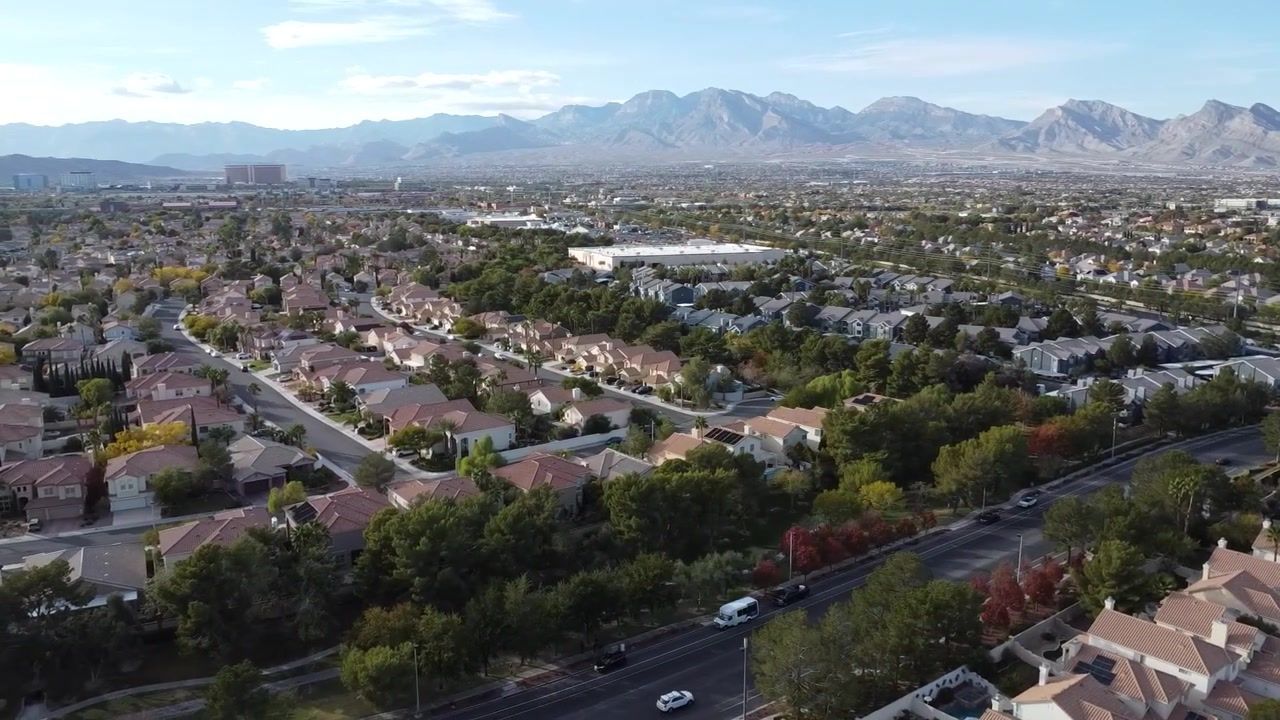
Age restrictions limit your buyer pool when it's time to sell. There is an 80/20 rule. Up to 20% of residents can be younger than 55. But most younger people don't shop in 55+ communities, so the pool is smaller.
This limited buyer pool can mean it takes longer to sell your house and possibly lower comparative values. I don't always see that, though. The demand for 55+ homes in Las Vegas is very high. I've been looking all over Sun City Anthem the last two weeks with a couple of different clients. Out of over 7,000 homes, there are only about 70 homes for sale. That's around 1%. Homes are still selling pretty quickly even with age restrictions.
That said, homes in 55+ communities can stay on the market a bit longer than in regular neighborhoods with a larger pool of buyers. It depends on the market. I was talking with a client the other day about resale concerns. He just looked at me and smiled and said, "That's not something I'm concerned about. My kids are going to sell my house when I'm done with it." We both had a little laugh. If the house sits on the market an extra month or so, the kids aren't going to worry about that.
Location matters tremendously. In some parts of town, properties hold their values better than others. Summerlin has been very strong in that regard. Neighborhoods like Sun City Summerlin, Sienna, Trilogy around Billionaires Row, and Regency can hold their value really well simply because of their prime location.
If a quick sale is important to you, buying in a 55+ community is something to think about. It can take a little bit longer to sell your home if that's what you end up needing to do.
The Predictable, Peaceful Environment
There's a noticeable absence of noise and activity typically associated with neighborhoods with young families. No loud parties at 2 AM. No skateboarding on sidewalks. A general respect for quiet hours.
For many of my clients, especially those coming from really busy neighborhoods, this predictability and calm is exactly what they're looking for in retirement. As one of my clients put it, "I've earned my peace and quiet in my retirement, and I finally have it."
Visitor Limitations and Grandchildren
Most 55+ communities have very specific rules about how long younger visitors can stay. By younger, we're talking about under 19. Typically grandchildren or other young visitors can stay 30, 60, or 90 days a year. Sometimes consecutively, but sometimes there are even shorter limits.
This can create practical challenges for family gatherings. I had a client who traditionally hosted their grandchildren for the entire summer and was surprised to learn the community limited that ability after they moved in.
Some communities require visitors to register on arrival, especially if they're using the amenities. That can require a pass, sometimes $5 a day on a limited basis. You can have visitors access the amenities with you. Rules can be more strictly enforced during peak times like summer or other seasonal periods when things are really busy.
It's critical that you check the rules because they vary from community to community.
Living Among Peers: Shared Life Stages
There's something uniquely comfortable about being surrounded by neighbors who share your generational experiences and reference points. The activities and clubs are geared toward your interests and needs. Wine tasting clubs. Technology workshops that help you stay connected with grandchildren.
When a community organizes a Medicare workshop or a retirement planning session, that information is relevant to just about everyone there. I've had clients who lived in regular neighborhoods where they felt increasingly disconnected from younger neighbors with different priorities.
The people around you are going through the same experiences. Adjusting to retirement. Losing a loved one. Dealing with grandchildren. Dealing with the invisibility of getting older. The people you socialize with every day have had those same experiences.
This shared life stage connection can create a sense of belonging that many people find deeply satisfying. As one resident told me, "I don't have to explain myself or my choices. Everyone already seems to just get it."
People after 55 start to have time compression happening. Everyone in a 55+ community has that same time compression. It's easier to understand each other and experience that sense of camaraderie. I hear that from people all the time.
Conclusion
At the end of the day, moving into a 55+ community depends on exactly what your needs are. Some of my clients love these communities, and you might too if you find the right one. On the other hand, you might want something completely different. I have a client who just bought a three-story home on the lake at Lake Las Vegas. I've got another client with a single-story home right on the golf course in a country club. There's something for everyone.
It's not all about 55+ communities. But if you're seriously considering a move to Las Vegas, to a 55+ community or anywhere else, feel free to reach out. I'm always here to help you find the perfect place to call home. Reach out, I'll walk you through the communities, show you the clubhouses, and help you understand the rules and the trade-offs.
I've lived in Las Vegas for more than 23 years. I love living here, and I make videos to share how passionate I feel about this incredible and dynamic city. Let's talk about what you're looking for and figure out if a 55+ community is the right fit.
FAQ: 55+ Communities in Las Vegas
What does low maintenance living actually mean in a 55+ community?
It depends on the type of home. Patio homes have the HOA handle all exterior maintenance, including landscaping, painting, and roof repairs. That can cost $400 to $600 a month in HOA fees. Single-family homes still require you to handle your own yard, but the lots are small and the landscaping is desert, so it's easy to manage yourself or hire an inexpensive crew.
Can my grandchildren visit me in a 55+ community?
Yes, but there are limits. Most communities allow underage visitors (under 19) to stay 30 to 90 days per year. Some communities limit it to two weeks at a time. If you traditionally host grandchildren for the entire summer, you'll need to check the specific rules for the community you're considering.
How much are HOA fees in Las Vegas 55+ communities?
HOA fees range from about $95 a month in Solera to $615 a month in Trilogy. Sun City Summerlin and Sun City Anthem are in the middle, around $149 a month. Fees typically increase 2% to 5% annually. Patio homes with full exterior maintenance have higher fees.
Can I rent out my home in a 55+ community?
It depends on the community. Most 55+ communities prohibit Airbnb and short-term rentals. Longer-term rentals often require minimum periods of six months to a year. Sun City Summerlin allows rentals as short as one month. Check the rental policy before you buy if this is important to you.
Will my home in a 55+ community be harder to sell?
Age restrictions limit your buyer pool, which can mean it takes longer to sell. However, demand for 55+ homes in Las Vegas is very high. Sun City Summerlin and Sun City Anthem each have over 7,000 homes but only about 70 for sale at any given time. Location matters. Summerlin communities hold their value better than communities farther out.
What are SIDs and LIDs in new 55+ communities?
SIDs (Special Improvement Districts) and LIDs (Limited Improvement Districts) are temporary taxes on brand new neighborhoods to pay for infrastructure. It's usually a small annual amount until the infrastructure is paid off. Brand new Del Webb communities may have these on top of your HOA fee.
Micah Bleecher Group
Helping 55+ buyers, retirees, and relocation clients make confident Las Vegas real estate decisions with local expertise, patience, and genuine care.

Recent Posts