Baby boomers catch a lot of blame these days. Somehow, even choosing to retire in Las Vegas has become something people feel they need to apologize for. The story goes like this: retirees from California and other expensive markets come in with equity, pay more than locals can compete with, push up home prices, then sit by the pool without giving anything back.
There is a little bit of truth buried in that conversation. More buyers competing for a limited supply of homes can raise prices. Las Vegas is also constrained by the enormous amount of federally managed land in Clark County, so simply building outward forever is not an option.
But that is not the whole story. Not even close.
The data coming out of Southern Nevada tells us that retirees and near retirees are not draining the Las Vegas economy. They are helping stabilize it. They bring purchasing power, paid-off equity, steady income, service demand, property tax support, and a buyer profile that looks very different from the debt-heavy, speculative market Las Vegas experienced before the 2008 crash.
Table of Contents
- Why Retirees Get Blamed
- Who Is Moving To Nevada
- Why 55 Plus Migration Matters
- How Today Differs From 2008
- The Healthcare And Job Growth Effect
- What This Means For 55 Plus Buyers
- The Bottom Line
- Frequently Asked Questions
Why Retirees Get Blamed
I understand why people look at higher housing costs and start searching for somebody to blame. A buyer arriving from a high-cost market may have substantial equity from the sale of a home in California, Arizona, Florida, or the Pacific Northwest. That can make a Las Vegas purchase feel more affordable to them than it does to a first-time local buyer.
Still, retirees are not doing something wrong by using the equity they spent decades building. The larger issue is basic supply and demand inside a valley with real limits on expansion. When more people want homes than there are homes available, prices respond.
What gets missed in the blame game is what happens after a household moves here. Retirees are not arriving to take jobs from younger workers. They are arriving to buy goods and services. They eat at local restaurants, shop locally, hire contractors, use medical services, join clubs, and support businesses throughout the valley.
That spending becomes income for the people working in those businesses. In a tourism-heavy economy like Las Vegas, that kind of steady local demand matters a great deal when travel and hospitality cycles slow down.
Who Is Moving To Nevada
Jeremy Aguero, principal of Applied Analysis, presented migration data to Las Vegas business leaders at Preview Las Vegas at the Wynn. The numbers should be part of every honest conversation about the housing market and retirement migration.
According to the data presented:
- 39.1% of people moving to Nevada are age 65 or older.
- 30.8% are between ages 55 and 64.
- Together, nearly 70% of new Nevada residents are age 55 or older.
- Family reasons were the leading reason for moving at 20.5%.
- Retirement and employment were tied at 19.9% each.
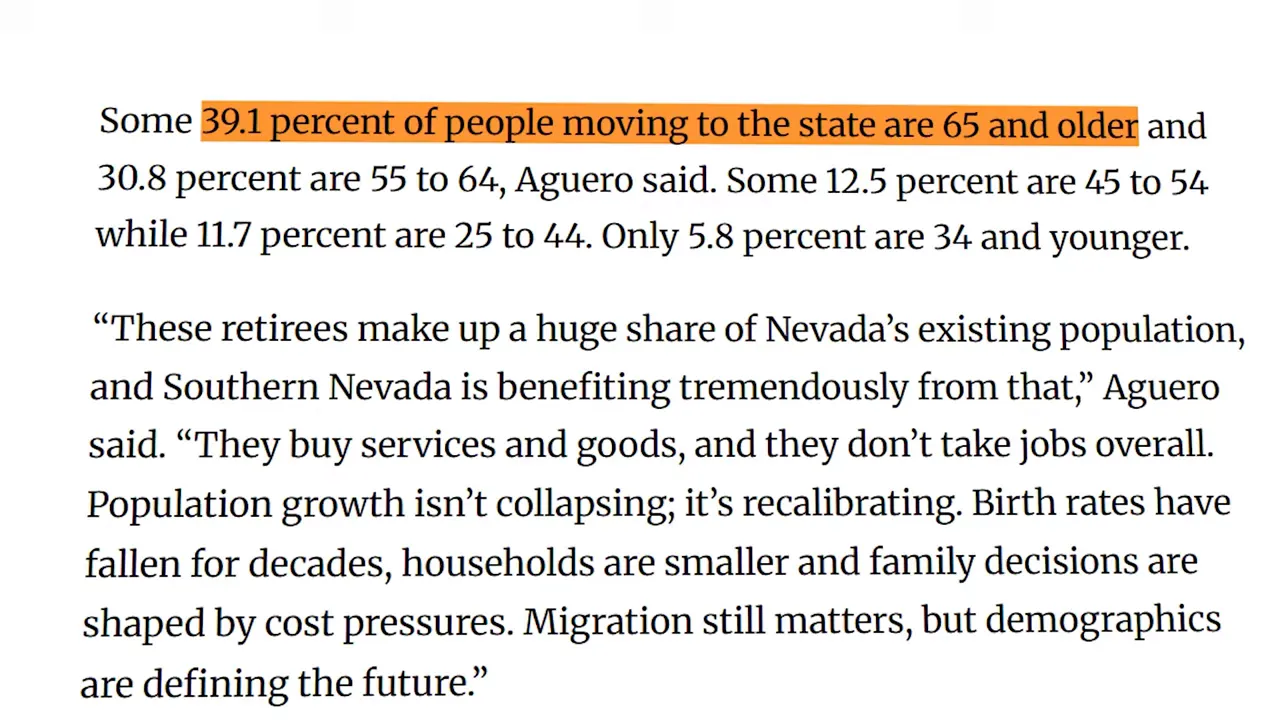
That last point is important. Retirement migration is not a niche phenomenon. It is one of the major forces reshaping Nevada right now.
Baby boomers make up about 23% of the United States population but account for more than half of household income. They are the wealthiest generation in American history. And this is not just a baby boomer trend anymore. Leading-edge Gen X is now entering retirement years too, bringing decades of equity, stable income, remote-work flexibility, and a clear idea of how they want to live.
Some people are finishing careers remotely. Others are retiring earlier than they once expected. Either way, the demographic wave is not fading out. It is broadening.
UNLV's long-term Clark County forecast projects growth from roughly 2.42 million residents in 2024 to about 3 million by 2045. If current trends continue, more than 500,000 people in that increase could be over age 55.
Why 55 Plus Migration Matters
The kind of buyer a market attracts helps determine how that market behaves when things get rough. That is the part of this story that gets really interesting.
Before the housing crash, Las Vegas depended heavily on job growth, tourism, easy credit, and speculation. Many buyers were stretched to the absolute edge of what a lender would approve. Some were buying because they expected prices to keep rising, not because they intended to settle in for the next chapter of life.
That type of demand is fragile.
A typical retirement buyer has a different profile. They may be bringing equity from a paid-off home. They may have pensions, Social Security, retirement accounts, or a combination of all three. Their income is not tied to whether a hospitality employer has a rough quarter. They are generally not buying a house to flip it next year.
That does not mean every retiree pays cash or that every purchase is risk-free. It means the overall buyer base has more equity, less leverage, and less dependence on the employment cycle than Las Vegas had during its most vulnerable period.
Homeownership is a big part of that stability. More than 80% of retirees own their homes, compared with roughly 55% of younger residents. That creates a more durable property tax base, even in a state known for relatively low property taxes.
Retirees also support Nevada's sales-tax-driven economy. When tourism is booming, they are spending locally. When tourism slows, they are still going out to dinner, shopping, using services, and living their lives. Their spending does not stop in the same way that hourly income can be disrupted during a hospitality downturn.
That is why Aguero's point was so straightforward: retirees buy goods and services, and they do not take jobs overall. In practical terms, they act as a shock absorber for the local economy.
How Today Differs From 2008
I was here in 2008, and I remember it clearly. Home values did not simply soften. They collapsed. Neighborhoods went deeply underwater. Foreclosures were everywhere, and North Las Vegas came dangerously close to bankruptcy. Recovery took longer here than in many major markets around the country.
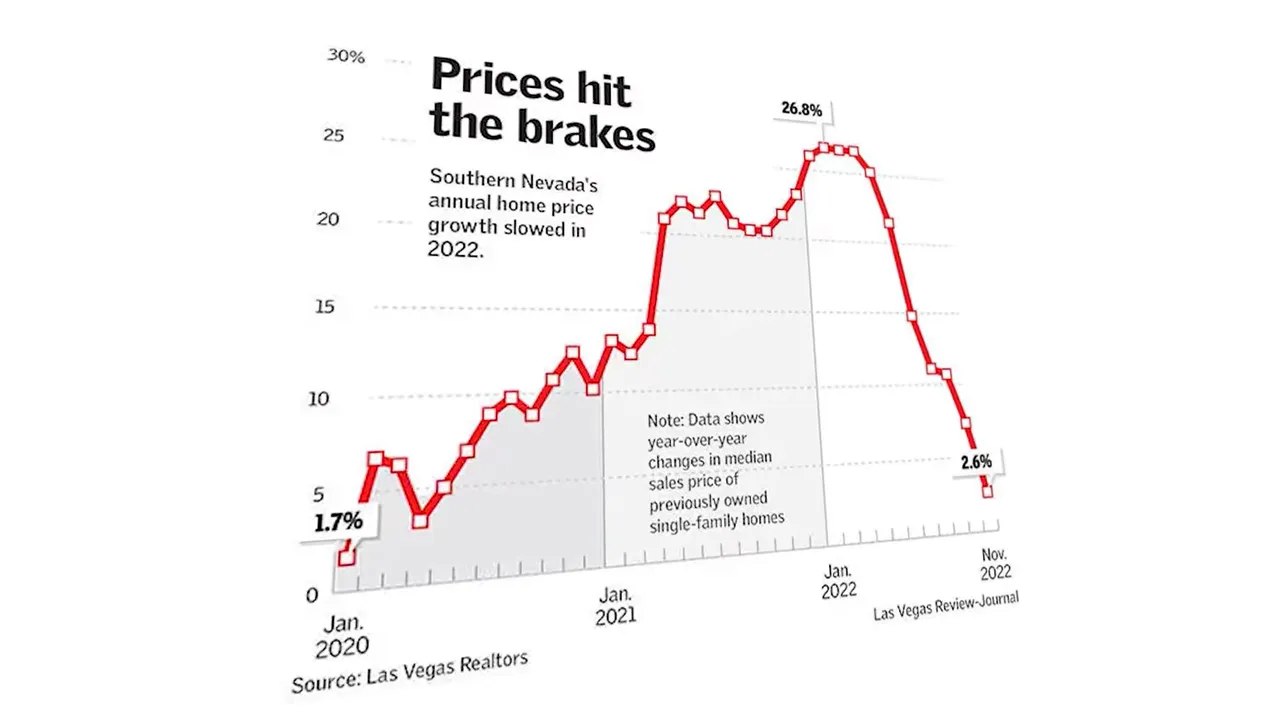
The crash was a perfect storm of speculative buying, debt-driven demand, job losses, loose credit, short sales, foreclosures, and too few qualified buyers left standing.
One client story illustrates the difference liquidity can make. During the crash, a buyer from Australia who had cash available bought approximately 23 heavily discounted homes. One property purchased for around $100,000 generated about $2,400 a month in rent. He could act because he had capital when forced selling was widespread and other people simply could not move.
That kind of opportunity requires distress. It requires sellers who must sell and buyers who cannot buy. That is not the same foundation we see today.
Loans are much more heavily underwritten. Many buyers are putting substantial money down. More homeowners have meaningful equity, which makes simply walking away from a property far less likely. A market can always shift, but the ingredients that created the 2008 catastrophe are not the same.
Communities with larger retiree populations also tended to hold value better during the recession than communities that depended almost entirely on job-based buyers. Retirees did not lose jobs because they were not dependent on jobs. Their income continued, and they were less likely to be forced sellers.
The Healthcare And Job Growth Effect
Here is the part that almost nobody talks about when they say retirees do not contribute. An aging population creates demand for healthcare, social services, construction, retail, dining, personal care, and all kinds of local services.
Southern Nevada's healthcare and social services sector was valued at about $18.4 billion in 2023 and employed roughly 102,000 people. Population growth and an aging population are primary drivers behind that expansion.
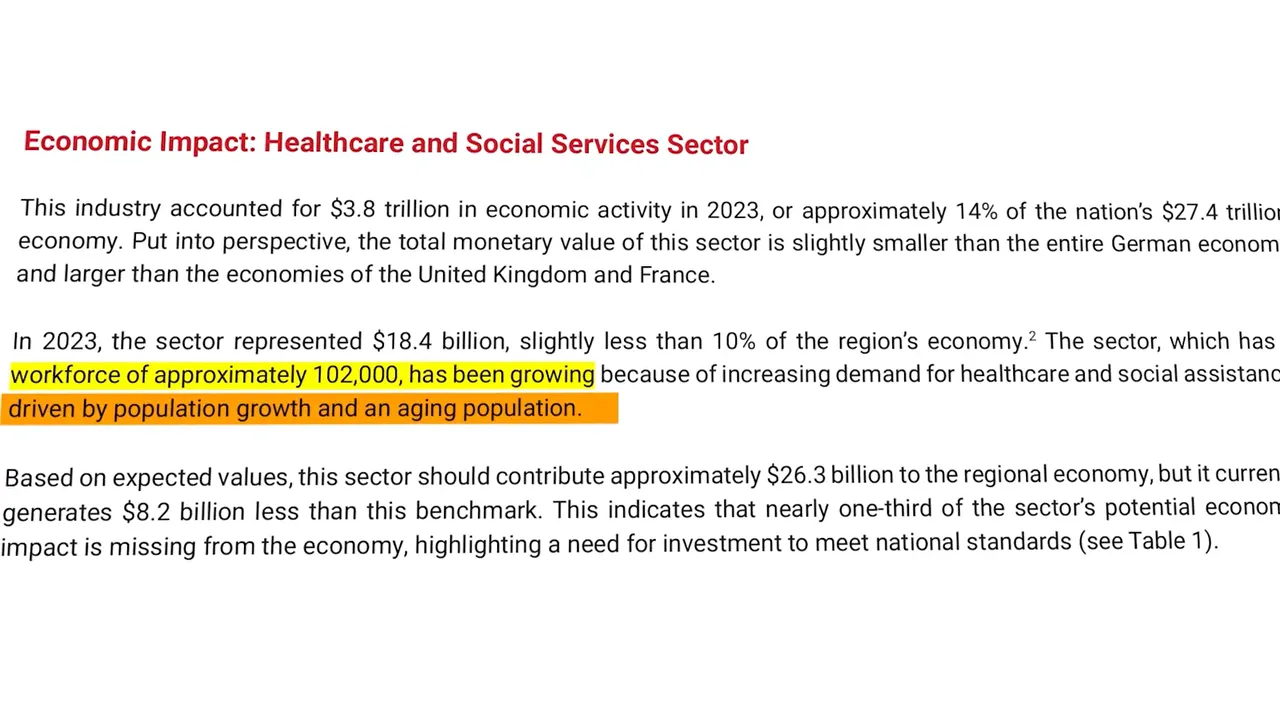
UNLV researchers have also pointed out that the region is underbuilt for the direct-care capacity its demographics will require. That means more demand for doctors, nurses, care workers, medical facilities, and supporting services.
Those are not job takers. They are job creators. Retirees are generating demand without competing for the same jobs. That is a powerful combination in a city that has historically leaned so heavily on tourism and hospitality.
There is a tradeoff, of course. If the population shifts too far toward retirement households, service industries can face labor shortages. More people consuming services and fewer people providing them can push costs up and may also put upward pressure on wages. That is a real planning challenge, but it is very different from saying retirees are a burden.
What This Means For 55 Plus Buyers
When you understand the demographic position of a financially stable 55-plus buyer, you start to see the market differently. Sellers and builders recognize that a buyer with paid-off equity, stable income, and a thoughtful plan is one of the most dependable buyers available.
That is why builders have been offering incentives such as interest-rate buydowns, closing-cost help, and upgrade discounts. They understand who the serious buyers are.
Today, the median Las Vegas home value is around the mid-$400,000s. Inventory has opened up compared with the frenzy of 2021 and 2022. The days of homes vanishing in 48 hours with 20 offers are largely behind us. That gives well-positioned buyers more room to do proper due diligence, negotiate repairs, compare communities, and make decisions without panic.
That does not mean anyone should buy blindly or rush a personal decision. Timing, financing, taxes, health needs, preferred neighborhoods, home layout, and proximity to family all matter. But if the question is whether retirees should feel guilty for moving here, my answer is no.
Southern Nevada is actively planning around this demographic. There is roughly $33 billion in the development pipeline, including major infrastructure projects, the Athletics ballpark that broke ground in June 2025, and Station Casinos' plan to double its footprint by 2030. Investment is not disappearing. It is reallocating toward what this growing population needs.
That capital does not flow into a market because decision-makers expect the floor to fall out. It flows where they see sustained demand.
The Bottom Line
Retirees are not the only thing supporting Las Vegas, and nobody should pretend they are. This city still depends on a broad, diverse economy and a healthy workforce. But the 55-plus migration wave is absolutely helping make the valley more resilient than it was during the boom-and-bust years.
Retirees bring equity. They bring stable income. They support local businesses, property taxes, healthcare jobs, construction, and services. They are more likely to be long-term homeowners than short-term speculators.
So when somebody says boomers and retirees are the problem in the Las Vegas housing market, remember the bigger picture. Nearly 70% of people moving to Nevada are over 55. This is the demographic business leaders are planning for, builders are serving, and the local economy is benefiting from.
You are not walking into a fragile market as a strain on the system. You are part of the reason the market has a steadier foundation than it did before.
If you're considering a move to Las Vegas, now is a great time to learn what the market has to offer. We'd be happy to answer your questions, compare neighborhoods, and help you decide whether Las Vegas is the right place for your next chapter. Call or text 702-820-0943
Frequently Asked Questions
Are retirees really the largest group moving to Nevada?
Yes. The migration data presented by Applied Analysis showed that 39.1% of people moving to Nevada are age 65 or older, while another 30.8% are ages 55 to 64. Together, that is nearly 70% of new residents.
Do retirees make Las Vegas housing less affordable?
Additional demand can put pressure on a limited supply of homes, especially in a land-constrained valley. But retirees also tend to bring equity, make larger down payments, and create more stable long-term housing demand than highly leveraged speculative buyers.
How do retirees support the Las Vegas economy?
Retirees spend on local goods and services while generally not competing for jobs. Their demand supports restaurants, retail, contractors, healthcare providers, social services, and other local businesses.
Is Las Vegas more stable today than it was before the 2008 crash?
The market has a different foundation today, with more heavily underwritten loans, more buyer equity, less pure speculation, and a larger base of fixed-income and retirement buyers. Markets can still change, but the conditions are meaningfully different from the pre-2008 period.