The headlines have been loud: Las Vegas is flooded with homes, retirees are leaving, investors are cashing out, and prices are about to crash. Well, friends, that is not what the real numbers show. The Las Vegas real estate market has more inventory than it did during the unusually tight conditions of the past few years, but more inventory does not automatically mean a collapse.
What we are seeing is a market moving away from the frantic, anything-goes seller conditions of recent years and toward a healthier place where buyers have choices, sellers must be strategic, and negotiation is back on the table. That is not a flood. That is normalization.
Table of Contents
- Inventory Is Up, But It Is Not a Flood
- Neighborhood Numbers Tell the Real Story
- Prices Are Stable, Not Crashing
- The New Reality for Sellers
- A Golden Window for Buyers
- Ignore the Fear and Use Local Data
- The Bottom Line on the Las Vegas Real Estate Market
Inventory Is Up, But It Is Not a Flood
Yes, active listings have increased. For single-family homes, inventory was up about 36.8% year over year. That sounds dramatic until we add the context that is missing from most scary headlines.
A year earlier, Southern Nevada had only about two months of single-family inventory. The current level is about 3.9 months. That is a major improvement for people trying to find a home, but it is still below what we would consider a fully balanced market. Traditionally, five to six months of supply is the range where buyers and sellers are on relatively equal footing.
The numbers are important, but the comparison matters just as much. The Las Vegas real estate market came from historic inventory lows. When we compare a very small number to another small number, the percentage change can look massive. It is like going from one cookie to two cookies and announcing that the cookie supply rose 100%. Technically true, sure. But we still only have two cookies.
Compared with the pre-pandemic market of 2019, the overall number of active listings remains well below normal levels. So, no, the pool is not overflowing. We are refilling a pool that had gotten nearly empty.
That shift is good news. A buyer can now evaluate more than one house before making a life-changing decision. A seller can still sell at strong values, but needs to price and prepare the home correctly. That is how a functional Las Vegas real estate market should work.
Neighborhood Numbers Tell the Real Story
Broad metro statistics are useful, but real estate is always local. We can learn more by looking at actual availability inside individual communities. These are MLS snapshots from several Las Vegas-area neighborhoods, including popular 55-plus communities.
- Sun City Anthem: About 114 homes were available out of roughly 7,200 homes, or about 1.5% of the neighborhood.
- Sun City Summerlin: About 191 homes were for sale among roughly 7,800 homes, or about 2.45%.
- Siena: About 37 homes were available out of approximately 2,000 homes, or about 1.85%.
- Peccole Ranch: About 33 homes were available among roughly 3,000 homes, or around 1.1%.
- Red Rock Country Club: About 37 homes were listed from roughly 1,100 homes.
- The Ridges: About 29 homes were available out of roughly 850 homes, or about 3.41%.
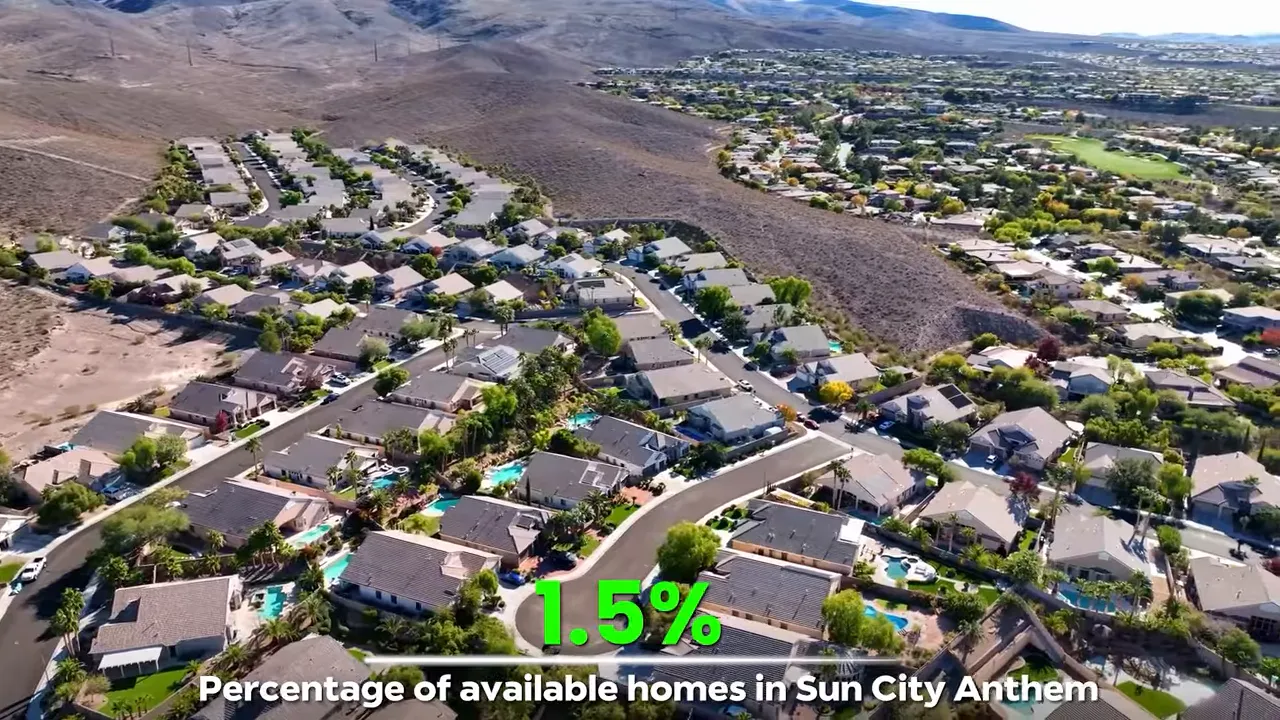
Those are not flood numbers. Even in higher-end communities, where homes naturally take longer to sell because of their price points, availability is not out of control. Luxury inventory may be a little more plentiful than the lower end in certain communities, but that is different from saying the Las Vegas real estate market is drowning in listings.
There is one area that is softer: condos and townhomes. Condo inventory is just over five months, which is closer to balance but still not wildly oversupplied. Financing plays a major role here. Banks periodically reevaluate which condominium communities they will lend on, and a building can lose financing options because of low reserves, excessive investor ownership, or litigation. When financing gets harder, the buyer pool shrinks. That is a specific condo issue, not a blanket verdict on the entire Las Vegas real estate market.
Prices Are Stable, Not Crashing
If there were truly a market-wide inventory flood, we would expect prices to be in free fall. That is not what the data shows. Zillow placed the average Las Vegas home value at $434,234, up 0.9% from the prior year. The median single-family sales price in Southern Nevada was $480,000, sitting just below the prior record of $485,000.
Could prices fluctuate? Of course. Markets do that. Are prices rising as fast as they did during the frenzy? No, and that is probably a healthy thing. The Las Vegas real estate market appears to be stabilizing around high levels rather than collapsing.
What has changed most is the timeline. Average days on market increased from about 37 days to about 56 days. That gives buyers a chance to think, inspect, compare, and negotiate. It also requires sellers to have patience and a real plan.
Still, homes are moving. More than 54% sold within 30 days, another 23% sold between 31 and 60 days, and 11% sold between 61 and 90 days. In other words, about 89% of homes were selling within 90 days. That is not what a broken market looks like.
Well-priced, well-prepared homes can still sell quickly and occasionally attract multiple offers. We have seen buyers hesitate over a home they loved, only to find that somebody else moved first. So buyers have breathing room now, but a good home at the right price is still a good home at the right price. It will not necessarily hang around waiting forever.
The New Reality for Sellers
It can still be a good time to sell in the Las Vegas real estate market. Values remain near record highs. But the market is not going to do all the work for us anymore.
A few years ago, some sellers could put a sign in the yard, skip the cleaning, price the house aggressively, and still get multiple offers over asking price within 48 hours. Those days are gone. Good. A stable market is better for the long-term health of the community.
The biggest mistake sellers can make now is pricing based on what a neighbor received in 2022. Buyers have more choices, more online data, and better tools to evaluate whether a home is worth the asking price. If a property is overpriced, many buyers will simply move to the next one.
Our formula is simple: the three Ps.
- Pricing: Start with a realistic strategy based on current competing listings and recent sales.
- Packaging: Prepare the home, address obvious condition issues, and make it easy to understand what the buyer is getting.
- Presentation: Use professional marketing and make the property show its best from the first day it hits the market.
Negotiation is normal again. Buyers may ask for repair credits, closing-cost help, or assistance with an interest-rate buydown. That is not an insult to a seller. It is simply part of a more balanced Las Vegas real estate market. Sellers still own valuable assets. They just need to participate in the process rather than expect the market to carry everything.
Homes in desirable neighborhoods, especially well-maintained properties under $500,000, continue to draw strong interest when they are priced correctly from day one.
A Golden Window for Buyers
For buyers, this is the most favorable Las Vegas real estate market environment we have seen in a long time. There are more choices than there were two years ago, less pressure to make a rushed decision, and more room for thoughtful negotiation.
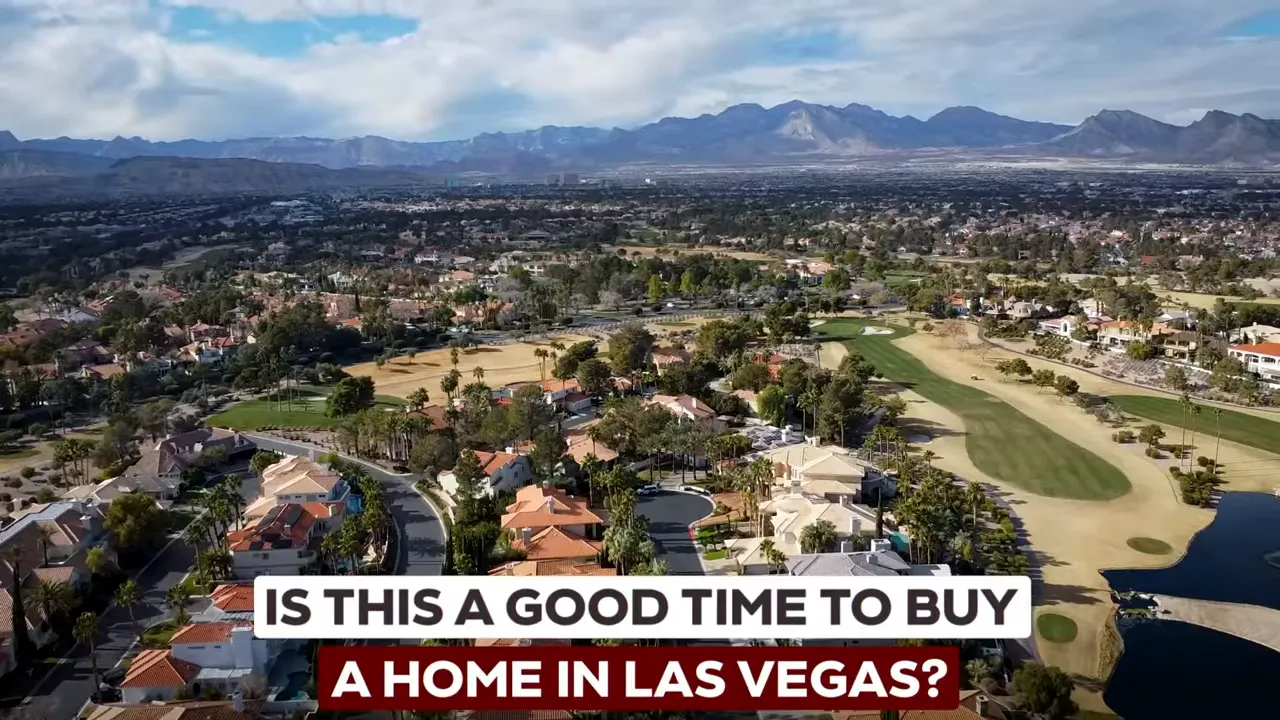
That means buyers can:
- Compare multiple homes rather than feeling forced into the first available property.
- Conduct a full home inspection and request repairs or credits when appropriate.
- Negotiate seller contributions toward closing costs or an interest-rate buydown.
- Make a decision based on fit, condition, location, and finances instead of panic over a dozen competing offers.
But we do not want to confuse leverage with a license to throw ridiculous lowball offers at every seller. The best homes are still commanding strong prices. More inventory does not mean every listing is a bargain. It means buyers can craft a deal that fits their financial situation without having to waive every protection just to get in the door.
For the right person, the Las Vegas real estate market offers both stability and choice right now. That combination has been hard to find for several years.
Ignore the Fear and Use Local Data
Fear gets clicks. A crash narrative gets attention. It benefits media companies, influencers, and real estate platforms that want traffic. It does not necessarily benefit people trying to make a smart housing decision.
When someone waits on the sidelines for a 2008-style collapse that the current data does not support, they may keep paying rising rent, delay building equity, or miss a home that would have fit their actual needs. Sellers can get hurt too. Fear may convince them they have missed their chance, even when their current property value and personal circumstances make a move worthwhile.
That is why national headlines are not enough. The Las Vegas real estate market is made up of individual neighborhoods, price points, property types, and financing realities. A condo community has different pressures than a single-family neighborhood. A luxury home has a different timeline than a well-maintained home under $500,000 in a popular 55-plus community.
The right question is not simply, “Is it a good time to buy?” The better questions are personal:
- Do we need to move?
- Does our current home still work for our life?
- Are we renting when we would rather own?
- How much time do we have to reach the next stage of life?
- What does the data say about the exact neighborhood and home type we want?
There is no one-size-fits-all answer. A move that makes perfect sense for one family may not be right for another. But decisions should be based on current, neighborhood-specific information, not a headline designed to scare us.
The Bottom Line on the Las Vegas Real Estate Market
The Las Vegas real estate market is not flooded. It is not crashing. It is stabilizing.
Inventory has improved from historically low levels, prices remain near record highs, and most homes are still selling within 90 days. Sellers need to price, package, and present their homes properly. Buyers have more choices, more negotiating power, and more time to make a smart decision.
A normal, stable market is where strategic people can reach their goals. Whether we are buying, selling, downsizing, or planning retirement, the best move is to ignore the hype, look at the facts, and build a real strategy around our own situation.
Ready to Make Your Las Vegas Real Estate Move?
Whether you’re buying, selling, downsizing, or planning for retirement, the right strategy starts with understanding your options. Book a call with me to talk through your goals, the current market, and your next move.
Frequently Asked Questions
Is the Las Vegas real estate market crashing?
No. Current figures show prices near record levels, with the median Southern Nevada single-family sales price at $480,000 and the average Las Vegas home value up 0.9% year over year.
How much inventory is available in the Las Vegas real estate market?
Single-family inventory is about 3.9 months. That is higher than the roughly two months available a year earlier, but below the five to six months commonly associated with a fully balanced market.
Is it a good time to buy a home in Las Vegas?
Buyers have more choices and more ability to negotiate inspections, repairs, closing costs, and interest-rate buydowns than they did during the recent seller frenzy. The right timing still depends on personal needs, finances, and the neighborhood being considered.
What should Las Vegas sellers do differently now?
Sellers should avoid pricing based on peak-era sales from 2022. Proper pricing, home preparation, professional presentation, and a willingness to negotiate are essential in the current market.