There is a retirement problem building across the country that many people do not see until it is already painfully close. People get into their 70s and 80s, look at the savings they spent decades building, and realize it may not last as long as they thought it would.
That is a hard place to be. By then, the choices can feel limited, the house is full of memories, family may be nearby, and moving feels overwhelming. But the financial pressure does not stop just because we do not want to make a change.
For many retirees, Las Vegas and the surrounding valley offer a different conversation. It is not the right answer for everybody. But when we run the whole picture, not just the home price, it can be a very real way to lower costs, unlock equity, and give a retirement plan more room to breathe.
Table of Contents
- The retirement numbers are tighter than they look
- Why home equity can create a cash flow problem
- Why retirees often stay put
- Why Las Vegas works for many retirees
- Turning equity into a more flexible retirement
- What the financial math can look like
- Reverse mortgages as another tool
- The real tradeoffs of retiring in Las Vegas
- Make the decision before the pressure makes it for us
- Frequently asked questions
The retirement numbers are tighter than they look
We have nearly 60 million Americans over 65 today, with another 65 million coming behind them. That is a whole lot of people trying to make a fixed or limited income work through rising prices, rising insurance costs, home repairs, healthcare needs, and everyday living.
The median net worth for Americans between 65 and 74 is roughly $410,000. At first glance, that might sound fine. The issue is that around half of that amount is commonly tied up in the home. That is equity, not spending money.
Once we separate home equity from cash and investments, the usable amount may be closer to $200,000. And that is the middle of the range, meaning half of people are below it. Almost half of American households do not have retirement savings at all.
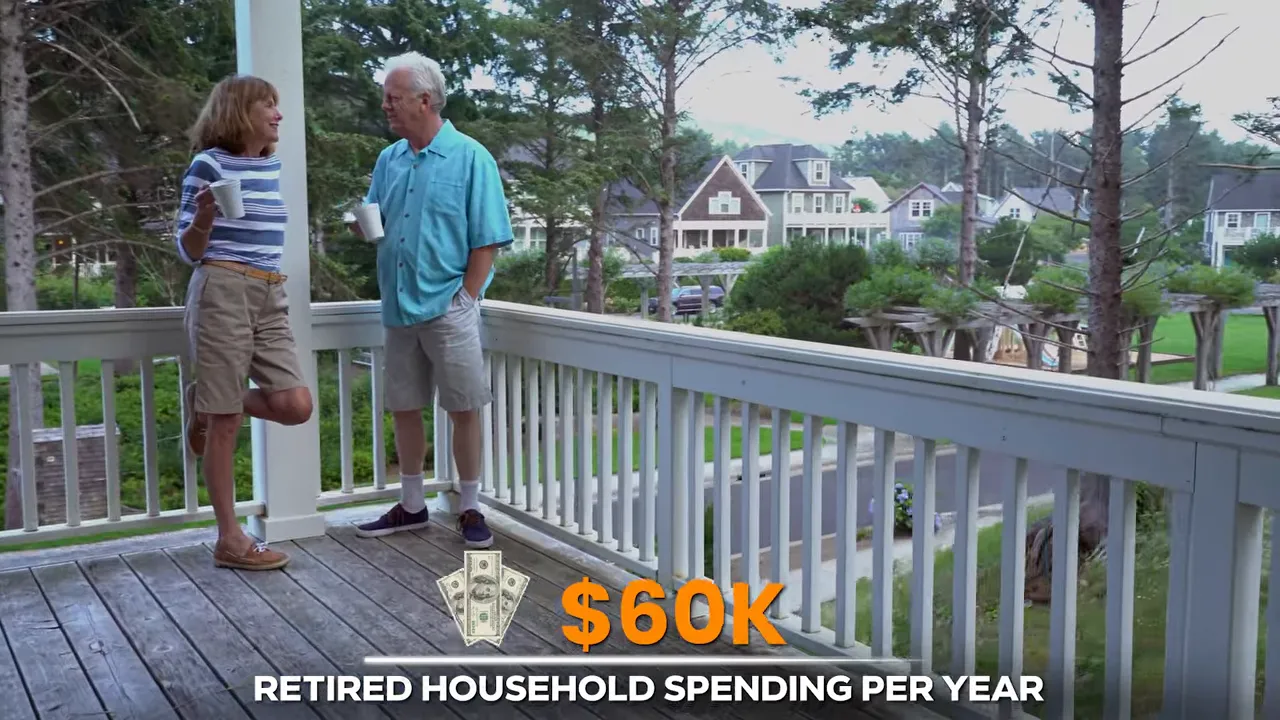
Then we get to spending. Retired households are spending around $60,000 a year on average. Social Security helps, but it often does not cover the full amount. Every year, the gap comes out of savings. A manageable gap at 70 can become a very serious issue by the early or mid 80s, especially when health costs or major home repairs arrive.
This is why we should not look only at the size of a nest egg. We need to look at the annual shortfall, the likely cost increases ahead, and how much of the assets are actually liquid.
Why home equity can create a cash flow problem
One of the biggest retirement traps is being wealthy on paper but short on cash. The house may have gone up significantly in value, but that does not pay the grocery bill, property taxes, insurance, utilities, or a new air conditioner.
We see this all the time. Somebody owns a valuable home, but most of their money is locked into the property. Meanwhile, their income stays roughly the same while expenses keep climbing. The home that was supposed to be part of the retirement plan becomes difficult to use for day-to-day living.
There is another version of this problem that catches people by surprise: becoming house poor after a move. We recently heard from someone who wanted to sell a home that was still under construction. They loved the neighborhood and the house, but they had put nearly all their available cash into the purchase. They realized there would not be enough left to comfortably live on after closing.
That is the conversation we need to have before the deal is done:
- How much cash will remain after closing?
- What will the monthly budget look like?
- What happens if insurance, taxes, or HOA fees increase?
- How much should be reserved for repairs, health needs, travel, and normal life?
- Will this decision still work five or ten years from now?
Getting the right house matters. Making an overall good decision matters more. That is what the French term savoir-faire means to us: more than skill. It is skill combined with judgment, wisdom, care, and timing.
Why retirees often stay put
On paper, the solution may seem simple. Sell the house, downsize, move somewhere with lower costs, and convert some of the equity into cash that can support retirement.
But retirement decisions are not just math problems. They are emotional decisions. The doctor may be nearby. The kids and grandkids may be nearby. Friends are nearby. The house may hold 20 or 30 years of memories. It is understandable that people hesitate.
While we stay still, though, the costs continue to move. Property taxes can rise. Insurance can rise quickly in certain parts of the country. Then there is the roof, the air conditioning, the plumbing, or the one unexpected repair that never seems to come at a convenient time.
There is nothing wrong with staying if the numbers work and being close to family is the priority. But if the financial pressure is building, it is worth giving ourselves permission to consider a change while we still have options and control.
Why Las Vegas works for many retirees
For a long time, Florida was the standard retirement destination. Nevada, and Las Vegas specifically, has become a serious alternative because the cost structure can be very different.
Nevada has no state income tax. That means Social Security income, 401(k) and IRA withdrawals, and investment income are not subject to state income tax. Nevada also has no state estate tax. For retirees moving from high-tax states such as California, New York, Illinois, or Washington, that difference can be meaningful year after year.
Property taxes are also relatively low and more predictable here. They can increase gradually, but the system is structured so a jump in home value does not create the same immediate tax shock that homeowners experience in some other places.
None of this means Las Vegas is perfect. It means the same retirement income may go further because less is leaving the household each month. That can change the entire feeling of a plan from tight and uncertain to workable.
Turning equity into a more flexible retirement
Homeowners across the country are sitting on record levels of equity. The issue is that equity can be trapped inside a house that no longer fits the lifestyle or budget.
Consider a simple example. A person sells a California home for about $700,000 and buys a home in Las Vegas for around $450,000. That can free up about $250,000 before accounting for transaction costs and their specific loan situation. That is no longer just equity on a statement. It is usable money that can be kept in savings, invested, or used to reduce future financial pressure.
And it does not automatically mean accepting a lesser home. In communities throughout Summerlin, Henderson, Green Valley, and Anthem, many retirees find homes that are newer, easier to maintain, and better designed for this stage of life.
In the valley, 55-plus communities including Sun City Summerlin, Sun City Anthem, and Siena are built around an active but manageable lifestyle. We are talking about walking paths, golf, swimming pools, fitness centers, pickleball, and social activities that help people connect after a move.
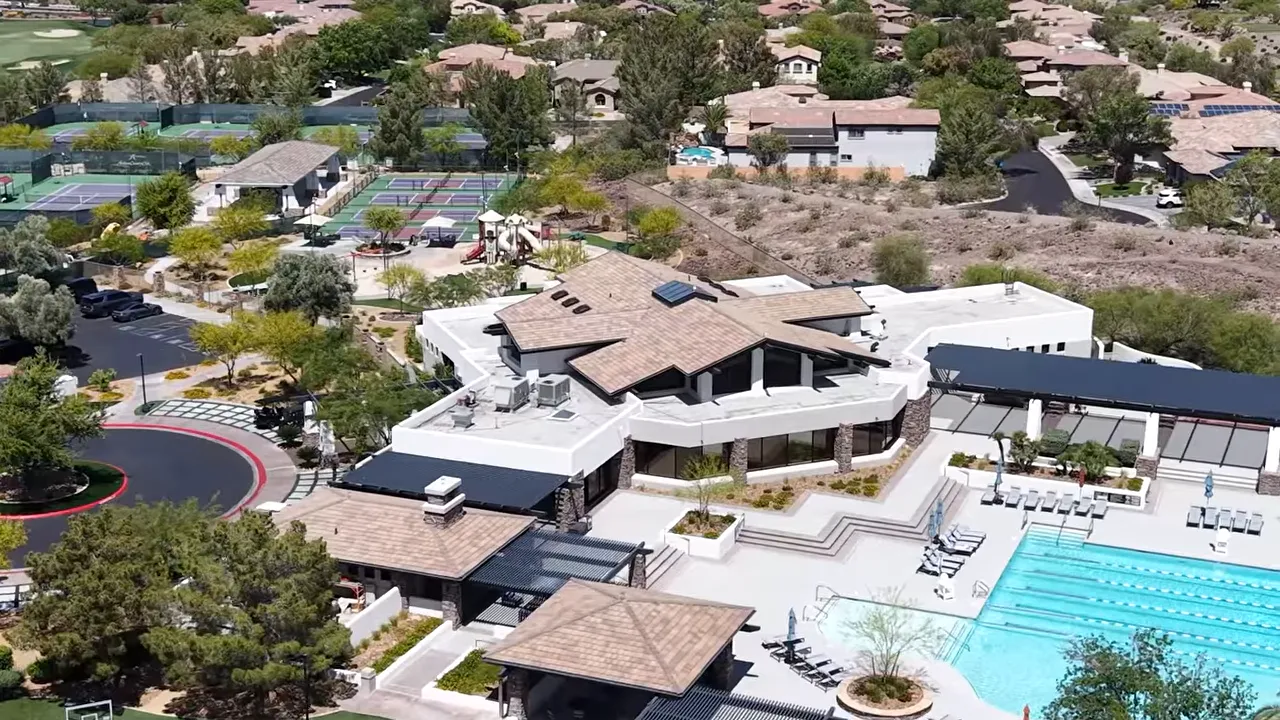
The point is not to move simply because a place is cheaper. The point is to see whether we can trade inaccessible home equity and high ongoing costs for a home and community that fit our lives better today.
What the financial math can look like
Every situation is different, and these numbers should always be reviewed with a financial planner and CPA. Still, an example makes the pressure easier to see.
Imagine a retired couple receiving $38,000 to $46,000 per year from Social Security. They have $200,000 in savings and spend around $60,000 annually. That leaves a gap of roughly $15,000 to $20,000 every year, coming directly out of savings.
Over time, that gap can drain the account, particularly if spending rises. Now change the cost structure. The couple sells a high-cost-state home, frees up $150,000 to $250,000 in equity, and starts with perhaps $350,000 to $400,000 in accessible savings rather than $200,000.
At the same time, they no longer pay state income tax. For a household bringing in around $80,000, that may keep $6,000 to $9,000 that had been leaving annually. Combined with lower housing costs, the difference can add up to $10,000 to $20,000 per year for some households.
On a $500,000 Las Vegas home, property taxes may be around $2,500 annually, depending on the home’s age and other details. That is not a promise or a quote. It is simply why we must run actual numbers based on the exact property and the exact household.
Las Vegas was reported as the top destination for retirees moving in 2025, with about 7,800 people over 65 moving to the city in one year and another 3,000 moving to Henderson. People are not necessarily coming on a whim. Many are responding to the same combination of housing costs, taxes, weather, and lifestyle.
Reverse mortgages as another tool
A reverse mortgage may be another option for the right person. It is not for everybody, and it requires a lender who specializes in these products along with the required counseling and education process. But it is worth understanding because modern reverse mortgages are not the same product many people remember from years ago.
For qualified buyers age 62 or older, a reverse mortgage can be used to purchase a new or resale home. A buyer might put 60 percent down on a $500,000 home, or around $300,000, without a required monthly principal and interest mortgage payment. Property taxes, homeowners insurance, and HOA dues still need to be paid.
The loan balance accrues over time, but it is a non-recourse loan. If the balance ever becomes higher than the home value, FHA insurance covers the difference rather than passing that obligation to the family.
For somebody focused on preserving monthly cash flow, or somebody whose heirs are financially secure, that can be a meaningful tool. It can also allow a person to purchase a better-fitting home without draining every dollar of liquidity. It is a decision to make carefully, with qualified financial and lending professionals, not a one-size-fits-all solution.
The real tradeoffs of retiring in Las Vegas
We should be honest about who this move fits. If family is close and being down the street from children and grandchildren is the most important thing, no tax savings replace that. If we already love where we live and the financial plan works, staying is a wonderful outcome.
This can make more sense when we have flexibility, our family is comfortable visiting, and the current retirement timeline is starting to feel tight. Flights from Las Vegas are convenient, with direct routes to many major cities, and friends and family often do come to Las Vegas.
Healthcare is one of the most important considerations. The local medical situation has improved, with hospitals including MountainView, Sunrise, and St. Rose, along with UNLV’s medical school bringing more doctors to the area. Still, healthcare here is catching up to very large metro areas such as Chicago or Los Angeles. We need to think carefully about personal medical needs before deciding.

On the lifestyle side, Las Vegas has close to 300 days of sunshine and mild winters. Red Rock Canyon is about 20 minutes away, and Mount Charleston is roughly an hour away. There are golf courses, trails, bike paths, pools, and pickleball courts throughout the valley.
The Strip is always there when we want restaurants, shows, sports, and big-city energy. But we do not have to live in the middle of it. Most retirees are living in suburban communities and choosing as much or as little of that action as they want.
Make the decision before the pressure makes it for us
Where we live in retirement may be one of the biggest financial decisions we ever make. The goal is not to tell everyone to move to Las Vegas. The goal is to stop guessing and start looking at the complete picture.
What might our current home sell for? What could we buy here? How much equity could we free up? What are the monthly costs after taxes, insurance, HOA dues, and normal living? Most importantly, does the decision make life better, not just the spreadsheet?
That is the conversation worth having while we still have choices. A retirement home should support the life we want to live, not quietly drain the money we need to enjoy it.
Frequently Asked Questions
Why are some retirees running out of money?
Many retirees have a gap between annual spending and income from Social Security or other sources. When that gap is pulled from limited savings every year, rising living costs, health needs, and home repairs can speed up the drawdown.
Does Nevada tax Social Security or retirement account withdrawals?
Nevada does not have a state income tax, so Social Security benefits, 401(k) and IRA withdrawals, and investment income are not taxed at the state level.
Can moving to Las Vegas help retirees unlock home equity?
It can for homeowners selling in a higher-priced market and purchasing a less expensive home in Las Vegas or Henderson. The amount released depends on sale price, purchase price, mortgage balance, transaction costs, and the household’s individual circumstances.
Are reverse mortgages a good option for retirees in Las Vegas?
They can be useful for qualified people age 62 or older in the right circumstances, particularly when monthly cash flow is a priority. They require counseling and should be evaluated with a reverse mortgage specialist and qualified financial professionals.
What are the biggest downsides of retiring in Las Vegas?
Being farther from family can be difficult, and healthcare access may not match the depth of larger metropolitan areas. Personal medical needs, family priorities, and lifestyle preferences should all be part of the decision.